
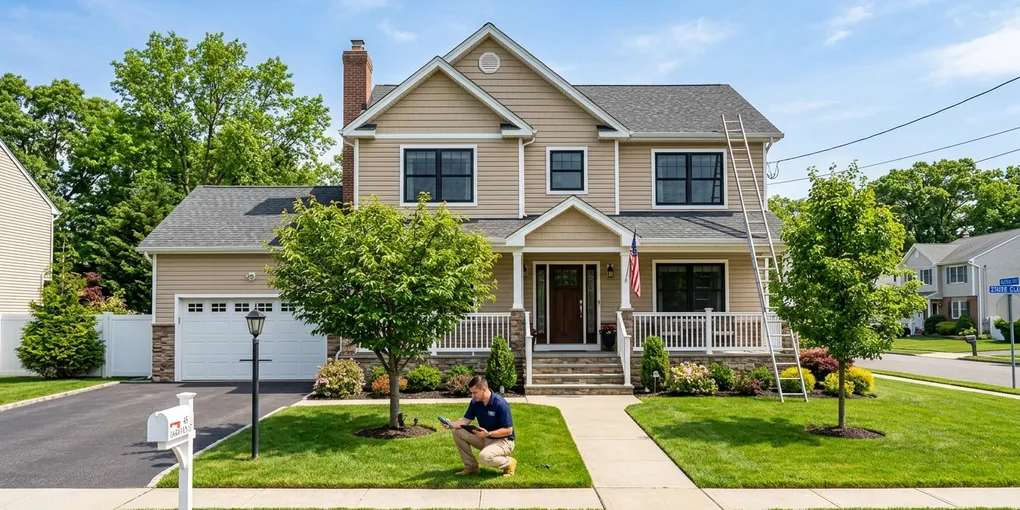
The Ultimate Guide to Spotting Roof Damage in Staten Island Real Estate Disclosures
Known as New York City’s “Borough of Parks,” Staten Island provides a distinctly suburban lifestyle set against the dramatic backdrop of New York Harbor and the Arthur Kill. From the commanding Victorian and Colonial Revival estates overlooking the bay in St. George, Grymes Hill, and Todt Hill to the brick split-levels of Great Kills and the classic single-family homes in Tottenville and Annadale, Staten Island offers a diverse architectural landscape rarely found elsewhere in NYC.
However, behind the manicured lawns and stately facades lies a severe structural challenge: Staten Island’s maritime coastal environment subjects residential roofs to relentless punishment.
Surrounded on all sides by water—Lower New York Bay, the Kill Van Kull, and Raritan Bay—Staten Island properties endure ferocious Atlantic Nor’easters, salt air aerosol corrosion, heavy wet winter blizzards, and severe freeze-thaw cycles that create chronic ice damming. Because Staten Island homes feature steep historic pitches, multi-layered asphalt shingles, or historic slate, roof deterioration is frequently hidden from street level and downplayed during transactions.
As an active New York real estate attorney and experienced Staten Island broker, I routinely see buyers face catastrophic out-of-pocket repair bills because they failed to properly analyze the seller’s property disclosure. In this comprehensive guide, we dissect the mechanics of coastal roof degradation, analyze New York’s landmark Property Condition Disclosure Statement (PCDS) laws, and teach you how to protect your investment during the due diligence period.
The Engineering of Coastal Roof Degradation on Staten Island
To inspect a Staten Island property effectively, you must understand the meteorological forces and architectural peculiarities of Richmond County.
Maritime Nor’easters and Wind-Driven Rain Infiltration
Staten Island is directly exposed to coastal storm fronts moving up the Atlantic Seaboard:
- Wind Uplift and Shingle Delamination: Nor’easters frequently deliver sustained winds of 40 to 60 mph with gusts exceeding 70 mph across shoreline neighborhoods like South Beach, Midland Beach, and Tottenville. High winds create intense negative pressure (uplift) along roof ridges, eaves, and rakes, snapping brittle asphalt shingles and breaking factory sealant strips.
- Wind-Driven Water Intrusion: When rain is blown horizontally at gale-force speeds, it bypasses standard gravity drainage. Water drives upward under shingle laps, penetrates unsealed flashing seams around brick chimneys, and infiltrates gable attic vents.
Winter Ice Damming and Freeze-Thaw Thermal Shock
During cold New York winters, Staten Island homes are prime targets for destructive ice dam formation:
- Attic Heat Migration: Many of Staten Island’s older homes—especially early-20th-century Colonials and post-war ranches—suffer from inadequate attic floor insulation and poor soffit ventilation. Warm air leaks into the unconditioned attic space, warming the underside of the roof sheathing.
- Ice Ridge Bottlenecks: Snow on the upper roof melts, runs down to the cold overhang of the unheated eaves, and refreezes into a thick block of ice. As subsequent meltwater backs up behind this frozen barrier, it forms a pool that forces its way under the shingles, soaking the plywood decking, rotting rafter tails, and destroying interior drywall and plaster ceilings.
Multiple Shingle Layering and Slate Deck Deterioration
Staten Island’s established housing stock contains common legacy roofing issues:
- The “Overlay” Dilemma: In decades past, it was common practice on Staten Island to install a new layer of asphalt shingles directly over an existing roof rather than paying for a complete tear-off. Adding a second or third layer traps heat, bakes shingles from below, dramatically accelerates curling and granule loss, and places excessive dead-load weight on older dimensional lumber rafters.
- Historic Slate and Fastener Failure: In prestigious hillside neighborhoods like Todt Hill and Emerson Hill, historic homes often feature authentic slate roofs. While slate stone itself can last well over a century, the iron or copper nails securing the slates and the underlying wood tongue-and-groove planking deteriorate over time. A slate roof may look intact from the ground, but rotted nails cause heavy slates to slide out of position during coastal storms.
Tired of manually reading 200-page disclosures?
Let DisclosurePro AI scan your documents for hidden termite damage, structural issues, and unpermitted work in 10 seconds. Try it free today.
New York Real Estate Disclosure Laws: The 2024 PCDS Overhaul
For decades, New York was notoriously known as a strict caveat emptor (“let the buyer beware”) state where sellers routinely paid a tiny $500 statutory credit at closing to avoid filling out a disclosure statement. However, a sweeping legislative overhaul has completely changed the legal landscape for home buyers.
The Elimination of the $500 Opt-Out Credit
Effective March 20, 2024, the New York State Legislature enacted major amendments to the Property Condition Disclosure Act (PCDA):
- Mandatory Disclosure: The amendment permanently eliminated the $500 opt-out credit. In standard residential transactions on Staten Island and throughout New York, sellers are now legally obligated to complete and deliver the comprehensive 48-question Property Condition Disclosure Statement (PCDS) prior to contract signing.
- Item 23 & 24 – Roof Age and Defects: The seller must affirmatively declare the age of the roof, the type of roof covering, whether they are aware of any material defects or active leaks in the roof, and the date and scope of any past repairs.
- Flood and Water Intrusion Questions: The updated PCDS includes rigorous questions regarding flood risks, water penetration, and moisture damage in the attic or exterior envelope.
Legal Standard: Actual Knowledge vs. Concealment
Under New York Real Property Law § 465, a seller who willfully fails to provide the required disclosure or knowingly provides false information is liable to the buyer for actual damages:
- The “Actual Knowledge” Boundary: Sellers are only required to disclose defects of which they have actual knowledge. They are not legally obligated to hire an independent roofing inspector before listing.
- If a seller lived in a home for a decade without looking inside the attic crawl space, they may honestly answer “No” to known roof leaks, even if water has been slowly rotting the rafter decking for years.
- Estates, trust sales, and foreclosure properties remain technically exempt from the PCDS requirement, leaving buyers of distressed properties without statutory seller warranties.
Evasive Phrasing in Staten Island Disclosures
When reviewing the PCDS in Richmond County real estate transactions, be wary of these common evasive descriptions:
- “Roof inspected annually; minor maintenance performed in 2023” — Often conceals that a roofer warned the roof had reached the end of its useful life, but the seller chose to apply caulking instead of replacing it.
- “Second layer of shingles installed; in good working order” — Masks the fact that the underlying first layer and wood decking were never inspected, and that NYC Building Code strictly limits shingle layering.
- “Small leak around chimney sealed by handyman” — Chimneys on Staten Island brick Colonials frequently suffer from mortar joint deterioration; caulking without rebuilding counter-flashing is an ephemeral fix.
- “Unknown age; no leaks observed during current ownership” — A common defense used by landlords or flippers that shifts the entire inspection burden onto the buyer.
The Manual Review Problem: Navigating the NYC Pre-Contract Due Diligence
Unlike states where buyers sign a contract first and then conduct inspections during an escrow contingency period, standard downstate New York real estate practice operates on pre-contract due diligence:
- A buyer conducts their home inspection before the formal contract of sale is signed by both parties.
- Once both parties sign and the buyer deposits a 10% contract deposit with the seller’s attorney, there is typically no inspection contingency in standard New York residential contracts.
During this tight pre-contract window (usually 5 to 7 business days), the buyer must thoroughly analyze:
- The newly mandated New York PCDS form.
- The 60-to-80-page general home inspection report with thermal imaging findings.
- New York City Department of Buildings (DOB) BIS and DOB NOW portals to verify whether permits were pulled for prior roof replacements and if any open structural violations exist.
- Historical utility and maintenance invoices.
Because NYC home inspectors often disclaim steep slate or two-story asphalt roofs—observing only from ladder brackets or ground level—vital information easily slips through the cracks. If a buyer fails to catch evasive answers on the PCDS before their attorney finalizes the contract, they lose all leverage and inherit complete liability for catastrophic repairs.
Financial Impact: A Real-World Todt Hill Tudor Case Study
To understand the severe financial consequences of an overlooked roof defect, consider this realistic scenario from Staten Island’s prestigious Todt Hill neighborhood.
The Purchase
Robert and Vanessa purchased a handsome 1935 brick and timber Tudor home on Todt Hill for $950,000. The property featured leaded glass windows, slate-accented roof valleys, and architectural asphalt shingles.
On the New York PCDS form under Question 23, the seller wrote: “Roof age approx. 12 years. Valley flashing recaulked in 2023; no active leaks.” During the pre-contract inspection, the home inspector observed the roof from the lawn using a drone, reporting: “Asphalt shingles appear in serviceable condition with moderate granule loss; flashing appears sealed.” Without ordering a specialized slate-and-flashing inspection, Robert and Vanessa signed the contract of sale.
The November Nor’easter
Nine months later, in late November, a fierce Nor’easter pounded Richmond County with 4.5 inches of wind-driven rain and sustained 55 mph gusts off Raritan Bay.
Water began pouring through the tongue-and-groove cedar ceiling of the second-floor master suite and running down the brickwork of the living room fireplace. A licensed NYC commercial roofing contractor conducted an emergency tear-back inspection and discovered massive hidden damage:
- The roof had never been fully replaced 12 years prior; instead, a second layer of architectural shingles had been nailed directly over 40-year-old degraded cedar shakes and rotted tongue-and-groove pine planks.
- The seller’s “2023 caulking” was an elastomeric tar patch applied directly over severely corroded lead valleys that had rusted through completely.
- Decades of coastal moisture had penetrated the unventilated attic space, completely rotting twelve structural rafter tails and breeding black mold across the roof sheathing.
- The sheer weight of the double layer of wet shingles had caused the main ridge beam to deflect downward by nearly 1.5 inches.
The Financial Devastation
Because the seller technically disclosed a “recaulked valley” and claimed they had no actual knowledge of rotted decking beneath the surface, proving intentional fraud under NY RPL § 465 was practically impossible. Robert and Vanessa had to pay for the complete structural overhaul out-of-pocket:
| Expense Item | Cost |
|---|---|
| Complete double-layer tear-off down to structural rafters and disposal | $6,800 |
| Sistering and structural replacement of twelve rotted Douglas fir rafters | $8,500 |
| Replacement of compromised plank decking with 5/8“ CDX exterior plywood | $5,400 |
| Installation of commercial-grade Ice & Water Shield across entire deck surface | $3,200 |
| Heavy-duty 50-year Architectural Shingles installation with high-wind warranty | $15,800 |
| Custom copper valley pans, step flashing, and chimney counter-flashing fabrication | $4,600 |
| Master bedroom plaster restoration, mold remediation, and insulation replacement | $5,200 |
| NYC Department of Buildings (DOB) filing, architectural drawings, and permit fees | $1,800 |
| Total Devastation | $51,300 |
Frequently Asked Questions about Roof Issues in Staten Island
1. Does the 2024 New York PCDS law protect me from roof repair costs?
The updated New York Property Condition Disclosure Statement (PCDS) requires sellers to disclose known roof defects, eliminating the former $500 opt-out credit. However, it only covers defects of which the seller has actual knowledge. If the seller was unaware of latent structural deck rot beneath intact shingles, the buyer remains responsible unless fraud or intentional misrepresentation can be proven in court.
2. Can you have two layers of shingles on a house in Staten Island?
Under the New York City Building Code, a maximum of two layers of asphalt shingles is permitted under specific conditions. However, reputable roofing contractors strongly discourage overlays on Staten Island due to heavy winter snow loads, ice damming risks, and the fact that a second layer conceals rotted sheathing and prevents proper installation of required ice-and-water shield membranes.
3. Why are ice dams so dangerous on older Staten Island homes?
Ice dams occur when heat leaking from uninsulated attics melts snow on the upper roof, which then refreezes into a ridge of ice at the cold unheated eaves. Backed-up water pools behind the ice dam and forces its way under the shingles, soaking roof rafters, interior wall insulation, and plaster ceilings. Older Staten Island homes with poor attic ventilation are particularly vulnerable.
4. What should I look for in Staten Island roof permits on NYC DOB NOW?
When reviewing a property’s record on the NYC Department of Buildings (DOB) BIS or DOB NOW portal, look for completed Alteration (Alt-2 or Alt-3) permits for reroofing that have achieved “Signed-Off” or “Letter of Completion” status. Unpermitted roof replacements or open DOB violations can result in hefty municipal fines and complications with your title insurer or mortgage lender.