
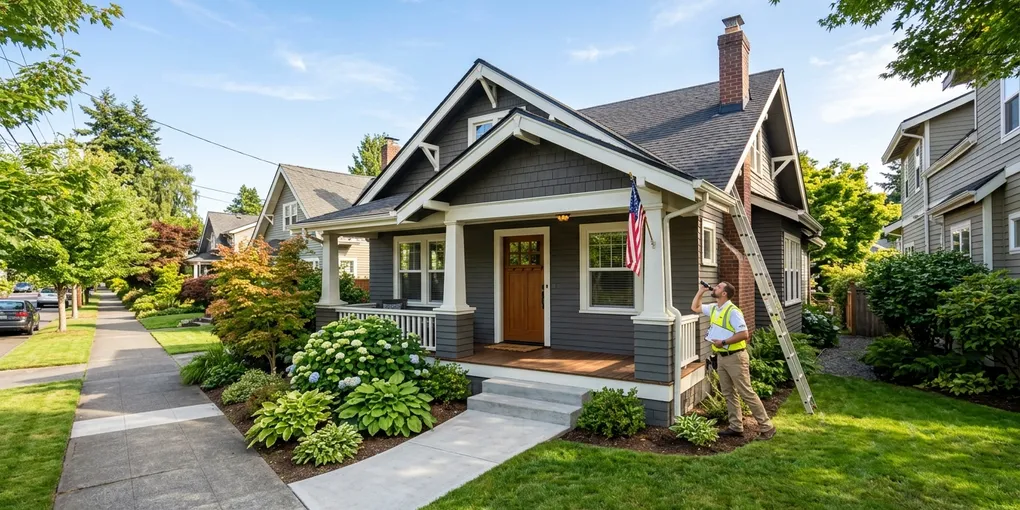
The Ultimate Guide to Spotting Roof Damage in Seattle Real Estate Disclosures
Seattle is renowned for its breathtaking natural setting, thriving technology-driven economy, and iconic architectural diversity. From the picturesque Craftsman bungalows and mid-century modern homes of Ballard and Wallingford to the stately historic Tudors overlooking Puget Sound in Queen Anne, Magnolia, and West Seattle, the Emerald City offers some of the most sought-after residential real estate in the Pacific Northwest.
Yet, Seattle’s world-famous emerald greenery comes at a well-known price: relentless, saturating moisture.
Seattle records over 150 days of precipitation annually. While the city rarely experiences the torrential cloudbursts common to the Gulf Coast, it endures eight continuous months of persistent drizzle, heavy cloud cover, and cool dampness. Under these conditions, residential roofs rarely have the opportunity to completely dry out. This prolonged saturation transforms roofing assemblies into prime real estate for moss, lichen, and wood-destroying fungi. When combined with historical architectural details like cedar shakes and low-slope roof lines, overlooking vague language in seller disclosures can leave Seattle buyers facing tens of thousands of dollars in unanticipated structural repairs.
Local real estate attorneys and buyer’s brokers regularly see how buyers navigateed numerous buyers who discovered devastating roof rot weeks after moving into their new home. In this comprehensive guide, we explore the mechanics of Pacific Northwest roof deterioration, break down Washington’s statutory Form 17 disclosure requirements, and highlight the red flags you must catch before your inspection contingency expires.
The Anatomy of Seattle Roof Damage: Moisture, Moss, and Cedar Shakes
Evaluating a home in King County requires an understanding of how the Pacific Northwest’s maritime climate attacks building envelopes.
Moss and Lichen Colonization
In Seattle, moss (Bryophyta) and lichen are not mere cosmetic nuisances; they are active structural destroyers:
- Mechanical Shingle Lifting: Moss spores thrive in the shaded moisture of Seattle’s northern roof exposures. As moss carpets expand, thick root-like rhizoids push beneath the bottom edges of asphalt shingles, breaking the factory sealant strips and physically prying the shingles upward.
- Moisture Sponge Effect: Mature moss retains up to twenty times its dry weight in water. Instead of shedding rainwater down the slope into gutters, moss-covered roofs act as saturated sponges, forcing water horizontally underneath shingles via capillary action.
- Granule Stripping and Substrate Breakdown: As moss freezes and thaws during damp winter months, it pulls protective ceramic granules away from fiberglass shingles, directly exposing the underlying asphalt matrix to rot and UV breakdown.
The Historic Cedar Shake Problem: Ballard and Queen Anne
A significant portion of Seattle’s mid-century and historic housing stock originally featured Western Red Cedar shake roofs:
- Failed Conversions and Skip Sheathing: Historic cedar shake roofs were typically installed over spaced wood decking (known as “skip sheathing”) to allow air circulation. When previous owners converted these roofs to modern architectural asphalt shingles without tearing off the cedar shakes or without installing continuous solid plywood sheathing, the conversion frequently fails. Shingle nails miss the spaced boards, creating hundreds of unfastened shingles that slip or leak during winter windstorms.
- Wood Rot and Fungus: Untreated cedar shakes in heavily treed Seattle neighborhoods succumb to wet rot and fungal infestation within 15 to 20 years if not regularly treated with specialized preservatives.
Inadequate Attic Ventilation and Condensation Rot
Because older Seattle homes often lack modern soffit and ridge vent systems, moist interior air from cooking and showers migrates into unconditioned attics. When that warm, humid air contacts the cold underside of roof plywood sheathing in mid-winter, it condenses into water droplets:
- Attic “Rain”: Chronic condensation mimics an active roof leak, dripping down into blown-in insulation and ceiling drywall.
- Fungal Dry Rot: Over several seasons, this trapped dampness fuels Coniophora puteana (cellar fungus) and Serpula lacrymans, completely rotting out structural roof rafters from the inside out while the exterior shingles look deceptively intact.
Tired of manually reading 200-page disclosures?
Let DisclosurePro AI scan your documents for hidden termite damage, structural issues, and unpermitted work in 10 seconds. Try it free today.
Navigating Washington Real Estate Disclosure Laws in Seattle
In Washington State, residential property transactions are governed by strict statutory disclosure requirements designed to protect buyers from concealed structural defects.
Revised Code of Washington (RCW) 64.06 and “Form 17”
Under RCW 64.06.020, sellers of residential real estate must complete and deliver the standardized Seller Disclosure Statement (commonly referred to as NWMLS Form 17) to the buyer within five business days of mutual acceptance.
Section 4 of Form 17 specifically addresses structural components, including the roof:
- Question 4A: “Has the roof leaked within the last 5 years?”
- Question 4B: “Has the roof been replaced or repaired? If yes, year of replacement/repair:”
- Question 4C: “Has there been any defect or damage to the roof or gutters within the last 5 years?”
- Question 4D: “Are there any known unpermitted additions or structural modifications?”
Buyer Rights and the Statutory 3-Day Rescission Window
Under Washington law (RCW 64.06.030), the delivery of Form 17 triggers a critical right:
- Unless the buyer explicitly waives the right in writing, the buyer has three business days following receipt of Form 17 to rescind the purchase agreement and receive a full refund of their earnest money deposit.
- If a seller fails to deliver Form 17 entirely, the buyer retains the right to cancel the contract at any time up until closing.
Seller Duties: Actual Knowledge vs. Constructive Concealment
Under Washington law, sellers are required to disclose defects based on their actual knowledge at the time of signing. However, sellers frequently exploit legal ambiguities by checking “Don’t Know” or drafting misleading explanatory notes:
- “Periodic moss treatment applied by professional service” (failing to mention that aggressive zinc treatments or pressure-washing stripped away essential protective granules).
- “Minor leak around chimney cricket repaired in 2023” (disguising ongoing rafter rot caused by improperly installed step flashing).
- “Roof age estimated at 10 years” (omitting the fact that the roof was installed directly over old cedar shakes without City of Seattle building permits).
- “Seller is an investor/flipper and has never resided on the premises” (used as a blanket excuse to mark “Don’t Know” across all structural items).
While Washington sellers are not required to hire an inspector before selling, active concealment (such as painting over active attic water stains or pressure-washing a heavily deteriorated roof right before open houses) constitutes actionable fraud.
The Manual Review Problem: Drowning in Seattle Due Diligence
In the competitive Puget Sound real estate market, purchase agreements routinely include abbreviated inspection contingency windows—often compressed to just 5 to 7 business days.
During this high-stress timeframe, Seattle buyers must scrutinize a dense stack of critical records:
- The 6-page NWMLS Form 17 disclosure document.
- The City of Seattle Department of Construction and Inspections (SDCI) permit database.
- The comprehensive private home inspection report (often 70+ pages with hundreds of photos).
- Specialized pest and wood-destroying organism (WDO) reports.
- Sewer scope video inspections and radon diagnostic reports.
Crucial roofing details are easily buried in technical jargon. For instance, an inspector’s report might note on page 52: “Observed localized delamination of CDX plywood sheathing in northern eaves.” A casual buyer might assume this is a cheap, cosmetic fix. In reality, in Seattle’s sodden climate, delaminated eave plywood is often the first indicator of systemic gutter overflow that has rotted through fascia boards, soffits, and underlying wall studs.
Financial Impact: A Real-World Ballard Craftsman Case Study
To see how disastrous an unvetted roof disclosure can be in Seattle, consider this realistic scenario from a historic home purchase in Ballard.
The Purchase
Liam and Chloe purchased a charming 1924 Craftsman bungalow in Ballard for $920,000. On Form 17, the seller answered “No” to active roof leaks and wrote under Question 4B: “New architectural roof installed in 2019; annual moss treatment completed.”
During their inspection contingency, their home inspector could not safely climb the wet, moss-slicked roof and relied on drone photography. The drone photos showed uniform dark gray shingles with clean gutters. Reassured by the seller’s statement that the roof was only seven years old, Liam and Chloe waived their inspection contingency and proceeded to closing.
The Disaster
In November, Seattle experienced the notorious “Pineapple Express”—an atmospheric river event that delivered three straight days of driving rain and high winds.
Water began trickling down the exposed brick chimney in the master bedroom and pooling on the original fir hardwood floors. When Liam contacted a licensed King County roofing contractor, an in-person attic inspection uncovered catastrophic hidden structural conditions:
- The 2019 roof was an unpermitted illegal overlay. The contractor had laid architectural asphalt shingles directly over original 1920s cedar shake skip sheathing without laying solid plywood decking or adequate ice-and-water barrier membranes.
- The cedar shakes underneath had turned into a sodden, decomposing sponge, holding gallons of water directly against the structural rafters.
- The previous owner had aggressively pressure-washed the shingles in 2024 to remove heavy moss before selling, stripping 60% of the mineral granules and creating micro-tears across the ridge caps.
- Five primary 2x4 fir roof rafters had succumbed to severe dry rot (Coniophora puteana) and were sagging dangerously under the weight of the waterlogged assembly.
The Financial Devastation
Because the seller claimed they had simply hired a roofing contractor in 2019 and “trusted their work,” proving intentional fraud in court would have required a protracted, high-cost legal battle. Liam and Chloe were forced to pay out-of-pocket for a complete structural reconstruction:
| Expense Item | Cost |
|---|---|
| Emergency tarping and industrial dehumidification | $3,600 |
| Hazardous tear-off of asphalt shingles and rotted cedar skip sheathing | $16,800 |
| Replacement of rotted structural rafters and custom rafter sistering | $19,400 |
| Installation of 1/2-inch CDX plywood sheathing and high-temp ice barrier | $11,200 |
| Installation of 50-year algae-resistant architectural shingles | $18,900 |
| Chimney lead counter-flashing custom refitting and masonry tuckpointing | $4,700 |
| Master bedroom ceiling plaster restoration, insulation, and hardwood refinishing | $12,500 |
| City of Seattle SDCI architectural permits and structural engineering inspection | $2,400 |
| Total Devastation | $89,500 |
Frequently Asked Questions about Roof Issues in Seattle
1. Does pressure washing moss off a Seattle roof damage the shingles?
Yes, dramatically. Pressure washing is one of the most destructive things you can do to an asphalt shingle roof. The high-pressure water stream strips away the protective ceramic granules that shield the asphalt layer from UV light and weather exposure. Once these granules are lost, shingles deteriorate rapidly, curl, and leak within a few seasons. The industry-recommended method in Seattle is gentle manual brushing followed by an EPA-approved zinc sulfate or eco-friendly moss treatment.
2. Can you put a new asphalt roof over an old cedar shake roof in Washington?
No. The Washington State Residential Building Code and City of Seattle municipal codes require that wood shakes or shingles be completely removed down to the framing before installing asphalt shingles. Furthermore, asphalt shingles require a continuous, solid nailing deck (such as plywood or OSB), whereas cedar shakes are typically installed on spaced 1x4 or 1x6 skip boards. Nailing shingles directly over shakes or open skip sheathing violates building codes and voids all manufacturer warranties.
3. What does “Form 17” require a Seattle seller to disclose about moss and roof maintenance?
While Form 17 does not specifically include the word “moss,” Question 4C asks whether there are any “defects or damage to the roof or gutters.” If extensive moss growth has caused shingle tabs to lift, granules to strip, or gutters to sag and overflow, failure to disclose these known physical defects constitutes a violation of Washington disclosure laws.
4. What is the typical lifespan of an asphalt shingle roof in Seattle?
Due to constant moisture exposure, heavy moss pressure, and minimal summer drying, standard 30-year architectural shingles in Seattle realistically last 18 to 22 years. Standard 3-tab shingles often fail in as few as 12 to 15 years, particularly on heavily shaded northern slopes or beneath Douglas fir and western red cedar canopies.