
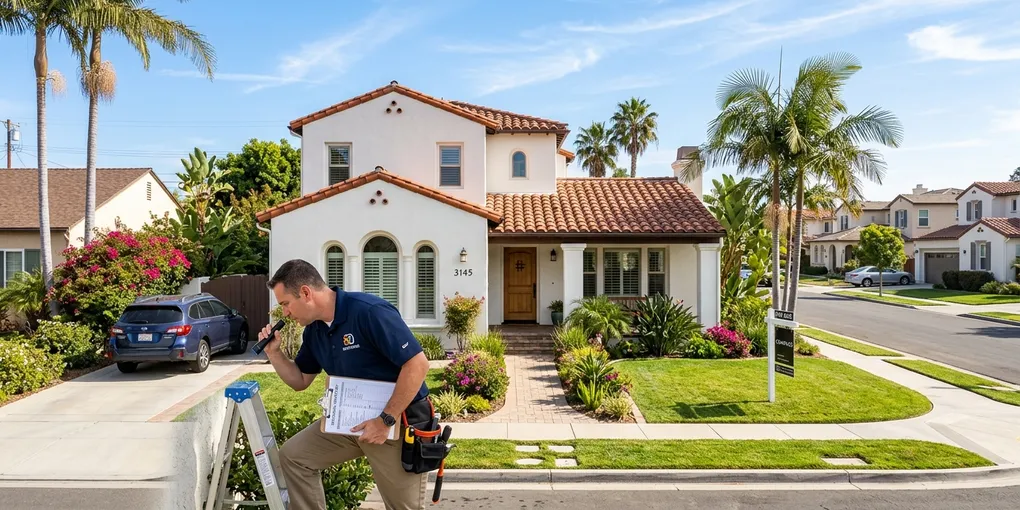
The Ultimate Guide to Spotting Roof Damage in San Diego Real Estate Disclosures
San Diego is frequently celebrated as having the finest climate in the United States. With over 260 days of sunshine annually, mild Mediterranean coastal breezes, and breathtaking topography spanning coastal bluffs to inland valleys, it is easy to understand why homebuyers compete fiercely for properties here. From historic Spanish Revival homes in Mission Hills and Kensington to coastal bungalows in Pacific Beach and sprawling single-family residences in Scripps Ranch, San Diego architecture embraces outdoor living.
Yet, San Diego’s idyllic weather often lulls prospective buyers into a dangerous false sense of security. Because the region rarely experiences blizzards, hurricanes, or torrential weeks-long downpours, buyers frequently assume that residential roofs suffer minimal wear and tear. This misconception couldn’t be further from the truth.
San Diego’s unique microclimates—marked by punishing solar radiation, heavy morning marine layers along coastal zones, fierce autumn Santa Ana windstorms, and sudden winter atmospheric rivers—inflict severe, hidden structural degradation on residential roof assemblies. When purchasing a multi-million-dollar San Diego property, failing to decipher vague or misleading roof disclosures can lead to catastrophic out-of-pocket financial ruin.
In this comprehensive guide, an experienced California real estate attorney and top-producing San Diego broker reveal the mechanics of Southern California roof degradation, break down statutory California disclosure obligations, and expose the subtle red flags that sellers use to disguise failing roofs.
The Anatomy of San Diego Roof Degradation: Beneath the Surface
Understanding how roofing assemblies deteriorate across San Diego County requires examining the region’s prevailing architectural styles and environmental dynamics.
The Spanish Clay and Concrete Tile Trap
Throughout neighborhoods like Rancho Bernardo, Poway, Point Loma, and Del Mar, Spanish barrel tile (clay or concrete S-tile) is the predominant roofing material. While these heavy aesthetic tiles can endure for 50 to 100 years without crumbling, the underlying waterproofing mechanism does not.
- The Underlayment Lifecycle: Concrete and clay tiles are not completely waterproof; they are water-shedding exterior shields. The genuine waterproofing barrier is the organic asphalt-saturated felt or synthetic underlayment fastened to the wood sheathing beneath the batten strips.
- Thermal Baking and Embrittlement: In San Diego’s sunny climate, attic and tile sub-surface temperatures regularly exceed 150°F during summer months. Over 20 to 25 years, this relentless thermal baking evaporates the volatile oils within the asphalt felt, turning it brittle like potato chips.
- Micro-Tears and Channel Leaks: When tiles shift during mild tremors or expand under thermal cycling, rainwater slips through head-laps and washes across degraded underlayment. The water finds brittle cracks, runs down rafters, and saturates ceiling drywall without presenting any immediate surface defects visible from the street.
Coastal Marine Layers and Salt Air Corrosion
For homes within five miles of the Pacific coastline—such as Ocean Beach, La Jolla, Bird Rock, and Coronado—the nightly marine layer (“May Gray” and “June Gloom”) creates a persistent microclimate of damp salt air:
- Fastener and Flashing Oxidation: Standard galvanized steel nails, valley flashings, and plumbing vent collars oxidize rapidly when exposed to salt-laden fog. Rusted fasteners back out of wood decking, puncturing membranes from underneath.
- Biological Growth and Capillary Action: Lichen and moss thrive on shaded north-facing roof planes in coastal canyons. This biological buildup acts as a sponge, retaining moisture against tile edges and wicking water backward beneath the flashing through capillary action.
Santa Ana Winds and Micro-Cracks
Each autumn, dry Santa Ana winds barrel through inland mountain passes toward the coast, delivering wind gusts exceeding 50 to 60 mph. These gusting winds lift loose concrete tiles, tear brittle composite shingle tabs, and drive airborne dust into drainage channels, causing water to pool behind valleys during subsequent winter rainstorms.
Tired of manually reading 200-page disclosures?
Let DisclosurePro AI scan your documents for hidden termite damage, structural issues, and unpermitted work in 10 seconds. Try it free today.
California Real Estate Disclosure Laws: What San Diego Sellers Must Reveal
California imposes some of the strictest real estate disclosure mandates in the nation. However, statutory frameworks only protect buyers who understand how to interpret the documentation provided.
The Real Estate Transfer Disclosure Statement (TDS)
Under California Civil Code § 1102, sellers of residential 1-to-4 unit properties must provide prospective buyers with a standardized Real Estate Transfer Disclosure Statement (TDS):
- Section II.B: Sellers must explicitly check whether they are aware of any material defects or malfunctions in the Roof, Interior Walls, Ceilings, or Drainage Systems.
- Section II.C: Sellers must disclose any known history of water intrusion, roof leaks, drainage settling, or unpermitted additions (such as unpermitted patio covers, room conversions, or rooftop viewing decks).
The Seller Property Questionnaire (SPQ)
In standard California Association of Realtors (CAR) transactions, sellers must also complete the Seller Property Questionnaire (SPQ). This document requires sellers to disclose:
- Any roof repairs, patchwork, or coatings completed during their entire ownership tenure.
- Any insurance claims filed for wind, water, or physical storm damage.
- The presence of unpermitted solar panel arrays or penetrations made by solar contractors.
- Known dry rot, termite damage, or fungi affecting the attic rafters, fascia, or eaves.
What Sellers Reveal vs. Conceal: Evasive Real Estate Phrasing
In competitive San Diego markets, sellers frequently attempt to soften material roof defects by employing artfully evasive language:
- “Tile roof original; regular tile maintenance performed in 2023” (ignoring that the roofer reported completely disintegrated underlayment that requires a $40,000 ‘lift-and-relay’).
- “Minor dampness around skylight during heavy storm, sealed with silicone” (masking rotten curb flashing and decayed structural rafter wood).
- “Roof inspected at time of prior purchase; no known issues” (omitting that the inspection was conducted seven years prior).
- “Property sold as-is; seller has lived out of state” (attempting to use lack of personal occupancy as a legal shield against disclosing chronic defects).
Under California law (Shapiro v. Sutherland), selling a property “as-is” does not exempt a seller from the mandatory duty to disclose known material defects. If a seller or their agent knows of an active leak or structural decay, failure to disclose constitutes actionable fraud.
The Manual Review Problem: Overwhelmed in California’s Contingency Period
In standard California residential purchase transactions, buyers typically have a contractual 17-day inspection contingency window—though in competitive San Diego submarkets, listing agents often pressure buyers to reduce this timeline to 7 to 10 days.
During this tight timeframe, prospective buyers must digest a staggering mountain of paperwork:
- The 3-page TDS and 4-page SPQ.
- The Natural Hazard Disclosure (NHD) Statement.
- The Preliminary Title Report (detailing utility easements, solar liens, and HOA restrictions).
- General physical home inspection reports (often 60 to 90 pages with hundreds of photos).
- Pest control / wood-destroying organism (WDO) inspection reports (outlining Section 1 and Section 2 termite or fungus damage).
- Local HOA disclosures, CC&Rs, and reserve studies (for condos and planned developments).
Critical roof warnings are frequently buried deep inside this documentation. For example, a home inspector might include a single bullet point on page 48 stating: “Observed mastic patching at chimney saddle and brittle felt beneath displaced tiles; recommend licensed C-39 roofing contractor evaluation.” If the buyer skims the summary and relies only on the seller’s clean TDS statement, they may waive their contingency without realizing that a full roof tear-off is imminent.
Financial Impact: A Real-World Pacific Beach Case Study
To see how disastrous a missed roof disclosure can be in San Diego, examine this realistic scenario involving a purchase in Pacific Beach.
The Acquisition
Marcus and Elena purchased a charming 1978 two-story Spanish Mediterranean home in Pacific Beach for $1,650,000. The listing marketed a “timeless Spanish tile roof that lasts a lifetime.”
On the SPQ, under the question regarding roof repairs, the seller wrote: “Replaced several cracked tiles in 2024; roof serviced by local contractor.” The general home inspector did not walk the steep second-story roof due to safety precautions, inspecting it only with binoculars from the driveway and noting: “Roof appears in functional condition; no active interior ceiling staining observed.” Reassured, Marcus and Elena closed on the home.
The Disaster
Four months later, a severe winter atmospheric river hit San Diego County, dumping four inches of torrential rain in 48 hours accompanied by 45-mph coastal gusts.
At 2:00 AM, water began pouring through recessed light fixtures in the upstairs master bedroom and down the interior drywall of the staircase. Marcus climbed into the attic crawlspace and discovered widespread water pouring through rotted sheathing.
An emergency C-39 roofing contractor arrived the next morning and uncovered the truth:
- The seller’s 2024 “tile service” was an attempt to cover up widespread underlayment failure. The underlying 30-pound felt had deteriorated completely into black powder.
- A previous unpermitted solar installation had bolted mounting brackets straight through the Spanish tiles without secondary flashing boots, creating dozens of direct puncture channels into the attic.
- Rotted plywood decking and structural 2x6 rafters had suffered extensive wood-decay fungus that had been painted over with white primer inside the eave overhangs.
The Financial Devastation
Because the seller claimed they had simply paid a handyman to fix cracked tiles and were unaware of sub-tile felt failure, legal recovery proved difficult and slow. Marcus and Elena were forced to pay for a full roof restoration immediately to prevent total interior collapse:
| Expense Item | Cost |
|---|---|
| Emergency tarping, scaffolding, and interior water extraction | $8,500 |
| Complete tile removal, salvaging, and off-site staging (Lift & Reset) | $16,500 |
| Replacement of dry-rotted plywood decking and structural rafters | $14,200 |
| Premium double-layer synthetic underlayment and high-grade copper flashing | $18,800 |
| Removal and reinstallation of solar panel system with code-compliant mounts | $7,500 |
| Structural drywall replacement, mold remediation, and interior repainting | $12,400 |
| Structural engineering consultation and City of San Diego building permits | $3,200 |
| Total Devastation | $81,100 |
Frequently Asked Questions about Roof Issues in San Diego
1. What is a “Lift and Reset” (or “Tile R&R”) on a San Diego tile roof?
A “Lift and Reset” (also known as a Tile Remove & Reinstall) is a roofing restoration procedure where existing clay or concrete tiles are carefully removed and staged, the rotted or brittle underlayment beneath is completely torn off, decayed wood sheathing is replaced, and brand-new premium underlayment and flashing are installed. The original tiles are then reinstalled over the new waterproofing layer. This procedure typically costs between $15,000 and $30,000—substantially less than buying brand-new tiles, but far more expensive than standard asphalt shingle replacements.
2. Can a general home inspector certify a roof in San Diego?
No. General home inspectors in California are generalists. Under California real estate inspection standards, home inspectors are not required to walk steep, slippery tile roofs or dismantle components to inspect the underlayment. To truly verify the health of a San Diego roof, you must hire a licensed C-39 specialty roofing contractor to perform an exhaustive, dedicated roof certification inspection.
3. How do unpermitted solar panels impact roof disclosures in San Diego?
San Diego has one of the highest per-capita concentrations of residential solar installations in the country. If solar panels were installed without City of San Diego permits or by uncertified crews, lag bolts driven through tiles frequently crack water barriers. On the SPQ, sellers must disclose whether permits were pulled for solar installations and whether the installation voided existing roof warranties. Unpermitted solar roof penetrations represent one of the most common sources of post-closing roof leaks.
4. What should I look for in the Wood Destroying Organism (WDO) report regarding the roof?
In California real estate transactions, the Structural Pest Control Board Form (WDO report) evaluates wood decay fungus alongside termites. Pay close attention to Section 1 items citing fungus or dry rot in the roof fascia boards, rafter tails, and starter boards. In San Diego’s coastal and canyon neighborhoods, moisture runoff from failed roof drip edges frequently causes extensive dry rot along the eaves, which often indicates that water is backing up beneath the roof membrane.