
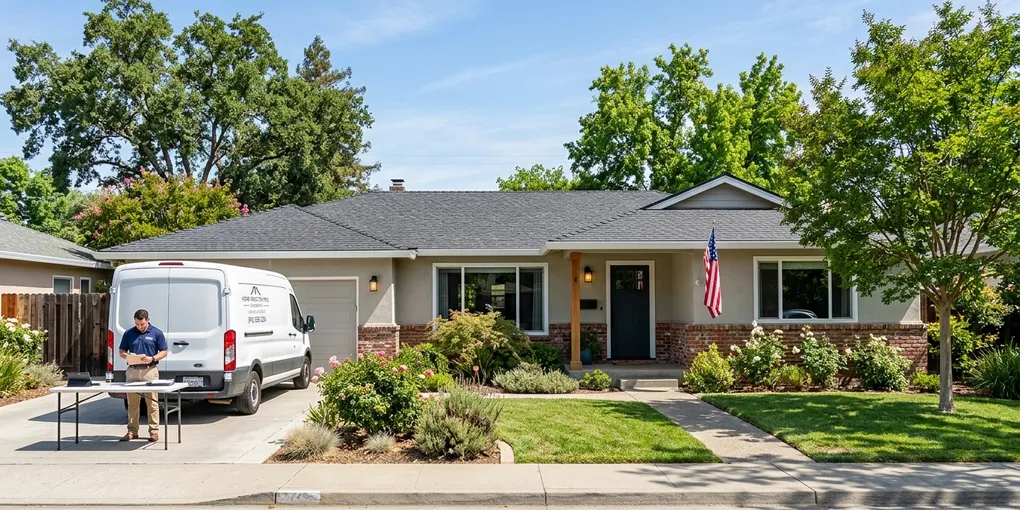
The Ultimate Guide to Spotting Roof Damage in Sacramento Real Estate Disclosures
California’s capital city offers one of the most attractive, leafy, and architecturally rich residential settings on the West Coast. From stunning 1920s Tudor Revivals and storybook bungalows in East Sacramento and the historic Fabulous Forties, to ornate Victorians in Midtown, elegant Spanish Colonial homes in Land Park and Curtis Park, and sprawling mid-century residences in South Land Park and Pocket-Greenhaven, purchasing a home in Sacramento is a dream for many Californians.
Yet beneath Sacramento’s world-renowned urban tree canopy and relaxed Delta breeze lifestyle lies an expensive hidden liability: Sacramento roofs endure severe environmental extremes, and roof defects are routinely obscured behind sanitized seller disclosures.
Sacramento experiences a volatile Mediterranean climate. In summer, the valley bakes in relentless triple-digit heatwaves—routinely topping 105°F—cooking unventilated attics and destroying waterproofing membranes. Then, during winter, Sacramento sits directly in the path of ferocious atmospheric rivers—powerful “Pineapple Express” storm systems that drop inches of wind-driven rain in hours, accompanied by 60-mph gale winds. When violent winter storms collide with the city’s massive heritage valley oaks and sycamores, residential roofs face immense structural stress from falling limbs, clogged valleys, and hydrostatic leaks.
Local real estate attorneys and buyer’s brokers regularly see how buyers navigate buyers who inherit tens of thousands of dollars in hidden roofing failures because they relied on high-level listing descriptions and missed subtle red flags in the California Transfer Disclosure Statement (TDS). In this comprehensive guide, we dissect the mechanics of Sacramento roof breakdown, analyze California disclosure statutes under Civil Code § 1102, and reveal how to spot deceptive seller disclosures before your contingency period closes.
The Anatomy of Sacramento Roof Breakdown: Atmospheric Rivers, Tree Canopies, and Valley Heat
Understanding how residential roofs deteriorate in Sacramento County requires analyzing the interplay between historic housing stock, modern materials, and regional weather patterns.
The City of Trees Dilemma: Decomposing Canopies and Limb Damage
Sacramento is famous for its dense urban canopy of mature valley oaks, camphor trees, and American elms—especially in neighborhoods like East Sac, Land Park, and Midtown:
- Tannic Acid Corrosion: Oak leaves and organic tree debris shed heavily every autumn, accumulating inches deep in roof valleys, crickets, and behind chimneys. As this debris decomposes in winter rain, it forms a damp, acidic sludge that eats away at the galvanized coating on valley metal flashings and accelerates asphalt granule shedding.
- Physical Abrasion and Storm Impact: Heavy tree limbs swaying in winter storm winds continuously scrape shingle surfaces, stripping ceramic granules and tearing shingles loose. Even worse, during severe atmospheric rivers with saturated soil, large oak branches break and puncture roof sheathing, cracking structural rafters.
- Moss and Lichen Colonization: Dense tree shade prevents winter roofs from drying out, fostering thick moss colonies that grow underneath shingle tabs, lifting them up and funneling wind-driven rain directly beneath the roofing membrane.
Blistering Sacramento Valley Heatwaves: The Underlayment Killer
From June through September, Sacramento experiences sustained heat, pushing roof temperatures above 160°F:
- Tile Roof Underlayment Breakdown: In suburban communities like Natomas, Greenhaven, and neighboring Elk Grove, concrete and clay tile roofs are ubiquitous. While concrete tiles resist heat, the underlying asphalt felt membrane does not. Extreme attic heat evaporates petroleum oils from standard 30# organic felt, causing it to become brittle and crack within 15 to 20 years.
- Composition Shingle Thermal Shock: On composition shingle roofs, rapid cooling from the evening Delta breeze causes thermal shock, breaking adhesive sealant bonds between shingle courses and leaving shingles vulnerable to wind lift during winter storms.
Mid-Century Flat Roofs and Eichlers in South Land Park
Sacramento boasts historic mid-century modern and Eichler-inspired residences in South Land Park:
- Ponding on Low-Slope Membranes: Flat built-up (BUR) and modified bitumen roofs settle over decades, creating low spots where water ponds during atmospheric rivers. Prolonged standing water dissolves seam adhesives and forces moisture through hairline cracks, soaking tongue-and-groove cedar ceilings below.
Tired of manually reading 200-page disclosures?
Let DisclosurePro AI scan your documents for hidden termite damage, structural issues, and unpermitted work in 10 seconds. Try it free today.
California Real Estate Disclosure Laws: Civil Code § 1102 & The TDS
California real estate law provides comprehensive statutory consumer protections, but enforcing your rights requires knowing what sellers are legally obligated to disclose.
The Real Estate Transfer Disclosure Statement (TDS)
Pursuant to California Civil Code § 1102 et seq., sellers of residential real estate (1 to 4 units) must complete and deliver the statutory Transfer Disclosure Statement (TDS):
- Section II.A & II.B: The seller must state the Roof Type and approximate Age, and affirmatively disclose any known defects or malfunctions in the roof, gutters, downspouts, ceilings, or walls.
- Section II.C: Demands disclosure of past or present roof leaks, water penetration into attics or living spaces, or settling issues.
- Permit and Code Violations: The seller must disclose whether room additions, reroofing projects, or structural alterations were conducted without City or County of Sacramento building permits.
The Seller Property Questionnaire (SPQ)
In standard California Association of REALTORS® (C.A.R.) purchase agreements, sellers also complete the Seller Property Questionnaire (SPQ):
- History of insurance claims filed for storm, wind, hail, or tree damage.
- Specific roof repair or maintenance work performed during the seller’s period of ownership.
- Known structural dry rot or termite damage affecting roof framing or eaves.
Agent Visual Inspection Disclosure (AVID)
Under California Civil Code § 2079, real estate agents must conduct a diligent, competent visual inspection of accessible areas and document red flags on the Agent Visual Inspection Disclosure (AVID) form. If a listing agent notices ceiling water stains, sagging gutters, or tree branches resting on a roof and fails to document it, they share legal liability for undisclosed defects.
Evasive Phrasing in Sacramento Seller Disclosures
Sacramento sellers and agents frequently deploy carefully crafted phrasing to minimize serious roof liabilities:
- “Roof inspected and tuned up in 2024; minor maintenance performed” — Conceals that an inspector warned the shingles were at the end of their useful life and only cracked tiles were sealed.
- “Trees trimmed regularly; roof in functional condition” — Masks that decaying tree limbs have punctured underlayment in hidden roof valleys.
- “Cosmetic ceiling touch-up in upstairs bedroom from prior leak; resolved” — Hides that water continues to seep behind drywall during atmospheric rivers.
- “New roof installed in 2023” — Fails to disclose that the roof was installed over decayed decking without City of Sacramento building permits or Title 24 cool-roof energy certification.
The Manual Review Problem: Navigating California’s 17-Day Contingency Window
In standard C.A.R. Residential Purchase Agreements (RPA), buyers typically negotiate a 17-day inspection contingency window (frequently compressed to 10 or 14 days in hot neighborhoods like East Sacramento or Land Park).
During this critical window, a buyer must thoroughly review and cross-reference:
- The multi-page statutory TDS, SPQ, and buyer/seller AVID forms.
- The 60-to-100-page comprehensive home inspection report.
- The Structural Pest Control Inspection Report (Section 1 and Section 2 termite report, detailing dry rot in roof eaves, rafter tails, and fascia boards).
- The Natural Hazard Disclosure (NHD) report (detailing flood and high-wind hazard zones).
- City of Sacramento Community Development Department permit records to verify whether reroofing permits were pulled and passed final inspection.
- California Title 24 Energy Code documentation (verifying solar reflectance cool-roof compliance).
Because historic Victorians and multi-gabled Tudors are steep and dangerous to climb, general home inspectors routinely include disclaimers: “Roof inspected from ground level with binoculars or eave ladder due to steep pitch; condition of valley flashings and underlayment not verified.” If an overwhelmed buyer skimming through 200 pages misses that the termite inspector cited thousands of dollars in Section 1 dry rot in the roof framing, they assume total financial responsibility once contingencies are removed.
Financial Impact: A Real-World East Sacramento Tudor Case Study
To understand the severe financial exposure of an overlooked roof disclosure, consider this realistic scenario from a purchase in East Sacramento.
The Acquisition
Brian and Lauren purchased a picturesque 1932 Tudor Revival home in East Sacramento for $920,000. The property featured steep gables, leaded-glass windows, a magnificent overhanging valley oak, and architectural composition shingles.
On the California TDS, the seller checked “No” to roof defects, adding a brief note: “Roof inspected and tuned up in spring 2024; gutters cleaned; no active leaks.” The general home inspector inspected the roof from ladder eaves, noting: “Architectural shingles appear flat and intact; no active moisture detected in plaster ceilings with moisture meter.” Reassured, Brian and Lauren removed their contingencies and closed escrow.
The Atmospheric River Disaster
The following December, an intense atmospheric river storm slammed Sacramento, dumping 4.2 inches of rain in 36 hours with 55-mph wind gusts.
During the storm, heavy oak leaves choked the steep roof valleys. Water backed up past the valley metal flashing, finding holes in the 22-year-old dried-out felt underlayment. Water began pouring through the coved lath-and-plaster ceiling in the master bedroom and dripping into the formal dining room below, saturating original quarter-sawn oak flooring.
A licensed Sacramento C-39 roofing contractor performed an invasive inspection the following morning and discovered severe concealed failure:
- The roof consisted of cheap composition shingles installed over rotted, 1930s tongue-and-groove pine roof decking without required permits.
- The seller’s “2024 tune-up” had been an amateur patch job where an unlicensed handyman smeared black roof tar over decomposed valley flashings without cleaning decaying oak sludge.
- Overhanging oak branches had continuously abraded shingles on the northern slope, removing 80% of protective ceramic granules.
- Trapped moisture had rotted out four rafter tails and created extensive black mold growth across the unventilated attic space.
The Financial Devastation
Because the seller claimed they had relied in good faith on the handyman’s assurances, proving intentional fraud in court would have required months of costly litigation. Brian and Lauren were forced to pay for structural reconstruction out-of-pocket:
| Expense Item | Cost |
|---|---|
| Complete tear-off of shingles and rotted decking down to structural rafters | $6,800 |
| Sistering rotted rafter tails and rebuilding exterior eaves/soffits | $7,400 |
| Replacement of deteriorated pine roof decking with 5/8“ CDX plywood sheathing | $8,600 |
| Installation of Class 4 impact-resistant architectural shingle system with ice/water valley barrier | $15,800 |
| Professional tree service: crown reduction and deadwood pruning of overhanging valley oak | $2,800 |
| Attic mold remediation, antimicrobial encapsulation, and HEPA filtration | $4,100 |
| Historic plaster restoration, interior drywall reconstruction, and hardwood floor refinishing | $2,800 |
| City of Sacramento building permits and Title 24 cool-roof energy certification | $600 |
| Total Devastation | $48,900 |
Frequently Asked Questions about Roof Issues in Sacramento
1. Does California Title 24 apply to roof replacements in Sacramento?
Yes. Sacramento falls within California Climate Zone 12, which mandates strict “Cool Roof” energy efficiency requirements under Title 24, Part 6 of the California Building Standards Code. When replacing more than 50% of a residential roof, new shingles or tiles must meet specific Solar Reflectance Index (SRI) ratings (typically an SRI of 16 or greater for steep-slope roofs), or the property owner must install approved attic ventilation or radiant barriers.
2. How do overhanging trees affect roof lifespan in Sacramento?
Sacramento’s mature valley oaks and elms significantly accelerate roof decay. Falling leaves produce tannic acid that corrodes metal valley flashings, tree shade fosters moss and lichen growth that lifts shingles, and swaying branches scrape protective ceramic granules away. Homeowners should prune tree branches back at least 6 to 10 feet from the roofline to maintain proper airflow and sunlight.
3. What is the difference between Section 1 and Section 2 roof rot on a Sacramento Pest Report?
On a standard California Structural Pest Control (Termite) Report:
- Section 1 Items: Active wood-destroying organism damage or fungal dry rot (such as rotted fascia boards, soft rafter tails, or moisture damage from an active leak). Buyers typically request seller repairs or closing credits for Section 1 items.
- Section 2 Items: Conditions likely to lead to future infestation or decay (such as clogged gutters, soil-to-wood contact, or faulty flashing). Addressing Section 2 items promptly prevents costly future repairs.
4. How long does a tile roof underlayment last in Sacramento?
While concrete and clay tiles can last 50 years or more, the underlying asphalt felt membrane in Sacramento typically fails within 15 to 20 years due to severe 100°F+ summer attic heat. Modern high-temperature synthetic SBS-modified self-adhering underlayments are strongly recommended, offering lifespans exceeding 30 years under Sacramento Valley climate conditions.