
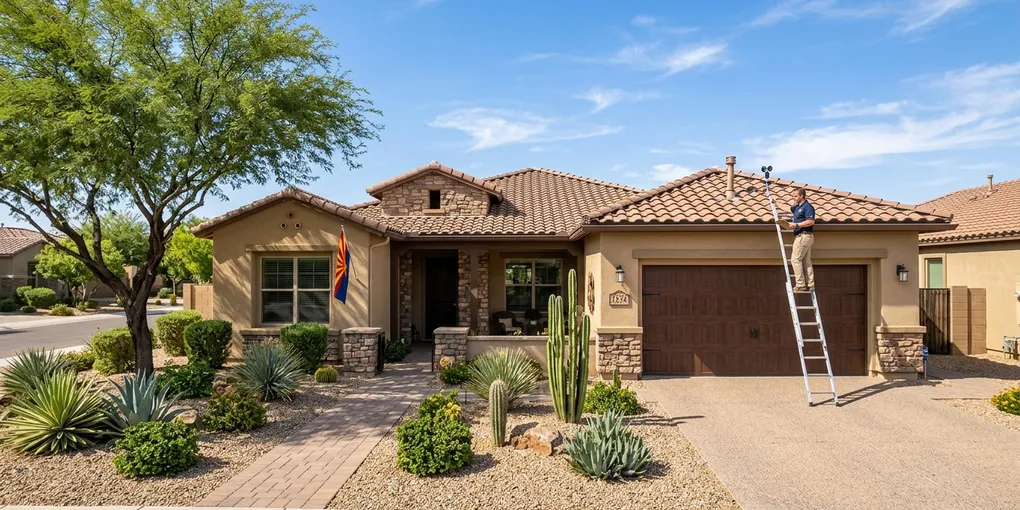
The Ultimate Guide to Spotting Roof Damage in Phoenix Real Estate Disclosures
The Phoenix metropolitan real estate market—spanning from luxury desert estates in Scottsdale and Paradise Valley to Mid-Century Modern homes in Arcadia and sprawling master-planned communities in Gilbert, Chandler, and Peoria—remains one of the most desirable housing markets in the country. Yet beneath the palm trees, sparkling swimming pools, and immaculate stucco exteriors lies a widespread structural vulnerability that blindsides thousands of Arizona homebuyers every year: failing roof underlayment.
Many out-of-state buyers assume that because the Valley of the Sun receives little annual rainfall, roof condition is a secondary concern. In reality, Phoenix possesses one of the most destructive roofing environments on earth. Relentless ultraviolet radiation and summer ambient temperatures exceeding 115°F bake roofing assemblies to extreme surface temperatures, silently disintegrating waterproofing membranes. When the violent summer monsoon season arrives, an aged roof fails with catastrophic speed.
As an experienced Arizona real estate attorney and top-producing Phoenix broker, I routinely represent buyers who face massive unexpected repair costs shortly after moving in. In this comprehensive guide, we will unpack how the Sonoran Desert climate destroys roofs, examine Arizona disclosure statutes, and teach you how to decode deceptive statements in the Arizona Seller’s Property Disclosure Statement (SPDS).
The Desert Paradox: How Phoenix Roofs Secretly Fail
To properly evaluate a Phoenix roof, a homebuyer must understand the difference between the outer decorative roof covering and the true waterproof barrier underneath.
The Concrete and Clay Tile Underlayment Trap
The vast majority of residential homes built in the Phoenix area since the 1980s feature flat concrete tiles or curved Spanish clay tiles. Sellers and listing agents routinely tout that “tile roofs last 50 to 100 years.” While the concrete or clay tiles themselves are practically indestructible, the underlayment underneath them is not:
- The Baking Oven Effect: During Phoenix summers, rooftop tile surface temperatures routinely reach 160°F to 175°F. This intense heat turns the space beneath the tiles into an oven. Traditional 30-pound asphalt-saturated organic felt underlayment dries out, curls, and literally turns to brittle, powder-like charcoal within 15 to 20 years.
- Microburst Monsoon Infiltration: During July and August, Arizona monsoons unleash 60-mph microburst winds and driving horizontal rain. Water is forced beneath the tile courses. If the underlying felt has disintegrated, water pours directly through the plywood decking and into the attic insulation.
- The “Lift and Reset” Reality: Once underlayment fails, you cannot simply patch a small area. The entire roof requires a full “lift and reset” (or “R&R” - remove and replace): every tile is carefully lifted, all rotted felt is scraped away, high-temperature self-adhering synthetic underlayment is installed, and the original tiles are reinstalled. This labor-intensive process costs tens of thousands of dollars.
Spray Polyurethane Foam (SPF) Flat Roofs
Many Mid-Century Modern homes in Central Phoenix and southwestern Santa Fe-style homes feature low-slope or flat foam roofs:
- Ultraviolet Vulnerability: Spray polyurethane foam is an outstanding thermal insulator and moisture barrier, but it has zero resistance to sunlight. It must be shielded by an elastomeric acrylic or silicone UV coating.
- The Five-Year Recoating Rule: In Phoenix’s intense sun, this elastomeric coating degrades rapidly and must be professionally inspected and recoated every 5 to 7 years.
- Porous Sponge Degradation: If an owner neglects recoating, UV rays burn through the elastomeric skin in months, exposing the bare foam. Sunlight turns the foam yellow, powdery, and porous, transforming the roof into a sponge that absorbs monsoon rainwater and rots the underlying wooden ceiling joists.
Parapet Walls, Scuppers, and Bird Stop Failure
- Bird Stops: Along the eaves of tile roofs, plastic or mortar “bird stops” keep birds and pests from nesting under tiles. When mortar bird stops crumble, pigeons nest under tiles, accumulating acidic droppings that corrode underlayment felt.
- Scupper Boxes on Parapets: Santa Fe-style flat roofs drain through openings in parapet walls called scuppers. If thermal movement tears the scupper flashing, water drains directly inside the stucco wall envelope.
Tired of manually reading 200-page disclosures?
Let DisclosurePro AI scan your documents for hidden termite damage, structural issues, and unpermitted work in 10 seconds. Try it free today.
Navigating Arizona Real Estate Disclosure Laws
Arizona law provides clear disclosure standards, but understanding what the seller is legally obligated to reveal—and what they commonly conceal—is critical.
The Residential Seller’s Property Disclosure Statement (SPDS)
In standard Arizona transactions, the Arizona Association of Realtors (AAR) Residential Seller’s Property Disclosure Statement (SPDS) is the governing legal disclosure document:
- Section 5 (Roof / Structural): Asks the seller to state the Approximate Age of the Roof, whether they are aware of any past or present roof leaks or problems, and whether the roof has been repaired, recoated, or replaced.
- Warranties: Requires disclosing whether there is an existing roof warranty and whether it is legally transferable to the buyer.
- Water Damage: Inquires whether the home has experienced interior water staining, ceiling damage, or mold.
The “No Leaks During Occupancy” Loophole
Because Phoenix experiences long periods of drought between rain events, sellers frequently take advantage of the legal phrase “actual knowledge”: If a home hasn’t experienced a severe rainstorm in eight months, a seller whose roof underlayment is 22 years old and completely pulverized can technically claim: “No active leaks observed during seller’s occupancy.”
While the statement may be literally true on a sunny day in May, the roof is nonetheless on the verge of catastrophic failure during the first July monsoon. Sellers routinely deploy evasive wording to protect themselves:
- “Tile roof inspected and cracked tiles replaced in 2022” (deliberately failing to mention that the roofer warned the underlayment was expired).
- “Flat foam roof recoated with elastomeric paint” (often a single thin coat applied by an unlicensed handyman to cover up UV-burned foam).
- “Roof age unknown; concrete tiles have 50-year lifespan” (deflecting attention away from the 20-year-old organic underlayment).
- “Seller has never occupied property; investor sale” (used to check ‘Don’t Know’ across all disclosure lines).
Under Arizona case law (such as Hill v. Jones), a seller has a mandatory common law duty to disclose all known material facts that adversely affect the value of the property, regardless of whether a specific question is asked.
The Manual Review Problem: Sifting Through Arizona Due Diligence
In standard Arizona transactions using the AAR contract, buyers have a 10-day Inspection Period to conduct all investigations, review disclosures, and deliver the Buyer’s Inspection Notice and Seller’s Response (BINSR).
During these ten days, buyers must review:
- The multi-page SPDS disclosure form.
- The Comprehensive Loss Underwriting Exchange (C.L.U.E.) report.
- Municipal permit records from the City of Phoenix, Scottsdale, or local municipalities.
- Professional home inspection, pool inspection, and termite/pest reports.
- HOA CC&Rs and reserve study summaries.
Manually cross-referencing these documents under tight deadlines is a major challenge. Crucial roof warnings rarely stand out. Instead, they are often obscured in:
- A footnote in an inspection report noting that the inspector did not walk on the tile roof to avoid cracking tiles.
- A passing line in a C.L.U.E. report showing an unsettled $15,000 windstorm claim from a previous monsoon season.
- A vague handwritten note in Section 5 of the SPDS noting “routine maintenance performed”.
Buyers who manually skim through these technical documents without specialized tools frequently miss these critical red flags, waiving their right to negotiate repairs or cancel the contract.
A Financial Nightmare: A Real-World North Scottsdale Case Study
To see how an overlooked disclosure note can financially devastate a buyer, consider this true-to-life case study from a master-planned community in North Scottsdale.
The Purchase
Brandon and Rachel purchased a four-bedroom single-family home with a concrete tile roof in North Scottsdale for $890,000. Built in 2001, the home appeared immaculate.
In Section 5 of the SPDS, the seller wrote: “Roof: Concrete Tile. Age: Original 2001. No known leaks during occupancy. Minor broken tiles replaced in spring 2023.”
Brandon and Rachel hired a reputable home inspector. The inspector examined the roof from a ladder along the roofline, noting that the concrete tiles appeared aligned and in good cosmetic condition. Relying on the seller’s statement that there were no known leaks and knowing that concrete tiles last 50 years, the buyers signed off on the BINSR and closed the deal.
The Disaster
Four months later, a massive July monsoon swept across the Valley, bringing 55-mph winds and dropping two inches of torrential rain in 45 minutes.
Within twenty minutes of the storm hitting, water began gushing through the living room can lights and soaking into the master bedroom ceiling. When Brandon climbed into the attic, he discovered water pouring through hundreds of staple and nail holes across the entire roof deck.
Brandon hired a licensed roofing contractor (ROC-licensed), who lifted several sections of tile and revealed the grim reality:
- The 2001 organic asphalt felt underlayment had completely baked away. It had turned into a dry, flaky powder that blew away with a touch.
- The 2023 “broken tile replacement” was performed after the seller noticed water stains in an attic closet; the roofer had issued a written estimate advising that the entire underlayment was 100% expired and required an immediate lift and reset.
- The seller had pocketed this information and omitted the roofer’s written report from the SPDS.
- High attic temperatures combined with trapped rainwater created rapid mold proliferation across the drywall and wood roof trusses.
The Financial Devastation
While Brandon and Rachel initiated arbitration against the seller for fraudulent concealment, arbitration takes months. They had to pay out-of-pocket for emergency restoration immediately:
| Expense Item | Cost |
|---|---|
| Emergency water extraction and drying equipment | $3,400 |
| Complete lift, salvage, and reset of concrete tiles (R&R) | $32,500 |
| High-temperature commercial synthetic underlayment installation | $6,800 |
| Replacement of water-damaged OSB roof decking and valley flashing | $5,400 |
| Attic mold remediation and antimicrobial ceiling encapsulation | $7,800 |
| Interior drywall replacement, texture matching, and painting | $8,200 |
| Total Devastation | $64,100 |
Frequently Asked Questions about Roof Issues in Phoenix
1. What is the true lifespan of tile roof underlayment in the Phoenix climate?
While concrete and clay tiles can last 50 or more years, standard organic asphalt felt underlayment (ASTM D226 Type II or #30 felt) typically lasts only 15 to 20 years in Phoenix due to extreme attic heat. Modern high-temperature synthetic underlayments and modified bitumen peel-and-stick membranes can last 25 to 35 years. If a Phoenix tile roof is more than 18 years old and still has its original underlayment, a full lift and reset should be budgeted immediately.
2. How often does a foam roof in Phoenix need to be recoated?
Spray polyurethane foam (SPF) roofs in Phoenix must be inspected and professionally recoated with elastomeric acrylic or silicone coating every 5 to 7 years. The coating protects the foam from UV degradation. If you neglect recoating, the foam will degrade quickly, absorbing monsoon rainwater and requiring a full, costly foam tear-off.
3. What does “Lift and Reset” mean on an Arizona roofing quote?
A “Lift and Reset” (also called an “R&R” - Remove and Replace) involves carefully removing all existing concrete or clay tiles, inspecting and replacing any water-damaged plywood decking, installing brand-new high-temperature underlayment and metal valley flashing, and reinstalling the original tiles. This is substantially cheaper than buying brand-new tiles while providing an entirely new waterproof barrier.
4. Can I hold a seller liable under Arizona law for failing to disclose a bad roof?
Yes. Under the Arizona Supreme Court ruling in Hill v. Jones and standard AAR contract provisions, sellers have a legal obligation to disclose known material defects that affect property value. If you can prove that the seller was aware of failing underlayment or prior leaks (for example, by obtaining prior roofer inspection reports or repair estimates that the seller hid), you can seek damages for fraudulent concealment, breach of contract, and attorney’s fees.