
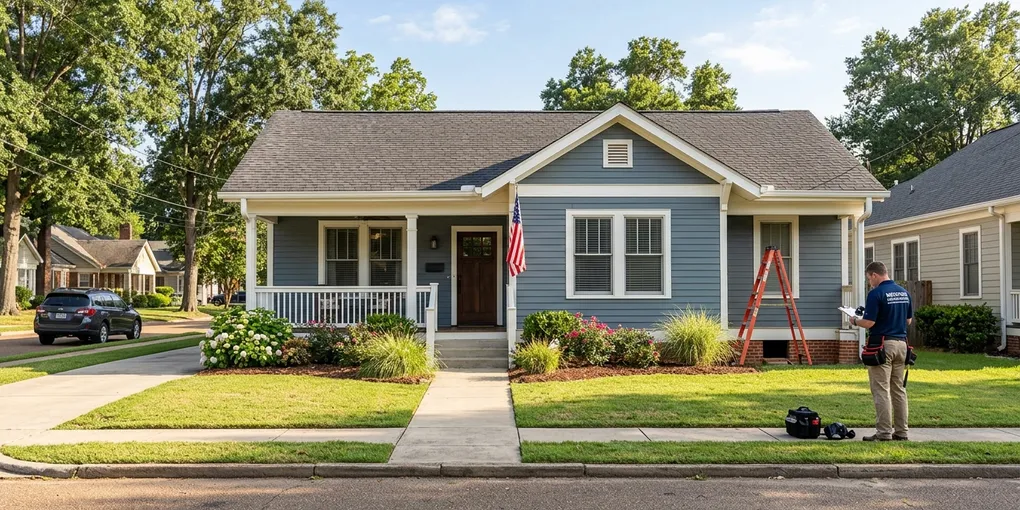
The Ultimate Guide to Spotting Roof Damage in New South Memphis Real Estate Disclosures
New South Memphis represents an established, evolving corridor of Memphis’s historic residential and investment landscape. Stretching southward from the historic bluffs and Downtown core, New South Memphis features a rich tapestry of post-war brick cottages, Craftsman-style bungalows, mid-century ranches, and traditional multi-family duplexes. For first-time homebuyers seeking affordability, local owner-occupants, and real estate investors capitalizing on Memphis’s strong rental yields, New South Memphis offers compelling property values and long-term potential.
However, behind picturesque porches and mature shade trees lies an architectural vulnerability that routinely catches buyers unprepared: severe, deferred roof degradation.
Like the broader Shelby County region, New South Memphis endures an aggressive Mid-South climate. Scorching summer temperatures exceeding 100°F heat index, suffocating humidity, violent Mississippi River convective storm fronts, straight-line wind gusts, and winter ice storms severely batter residential roofs. Furthermore, because New South Memphis has experienced waves of property flips, rental conversions, and out-of-state investor acquisitions, unpermitted handyman roof patches and illegal multi-layer overlays are extraordinarily common. Overlooking ambiguous phrasing or calculated omissions on a Tennessee property disclosure can leave an unsuspecting buyer facing overwhelming structural rebuilding costs.
As a practicing Tennessee real estate attorney and active local broker, I routinely guide clients through residential acquisitions where an overlooked roofing red flag turns an affordable property into a crushing financial liability. In this comprehensive guide, we dissect the mechanics of roof failure in New South Memphis, analyze Tennessee’s statutory disclosure laws, and expose the tactics sellers use to disguise damaged roofs.
The Anatomy of New South Memphis Roof Damage: Humidity, Canopy Hazards, and Flipping Overlays
Evaluating a home in New South Memphis requires an understanding of how local weather patterns and historic renovation practices interact with roofing assemblies.
Tree Canopy Hazards and Winter Ice Loading
Many residential streets in New South Memphis are lined with towering, mature hardwoods, including post oaks, sweetgums, and water oaks:
- Severe Ice Storm Loading: When winter freezing rain blankets the Memphis area, massive tree branches accumulate hundreds of pounds of ice. Limbs snap and fall directly onto residential roof slopes. The resulting impact shatters asphalt shingle mats, crushes underlying plywood or plank decking, and fractures structural 2x4 and 2x6 rafters.
- Organic Debris Decay: Shaded roof slopes accumulate fallen leaves, twigs, and moss. In Memphis’s humid climate, this organic debris traps moisture against the shingles, preventing natural drying and causing the underlying felt underlayment and wood decking to rot.
Extreme Thermal Cycling and Blistering
During prolonged summer heatwaves, roof planes in New South Memphis absorb relentless solar radiation:
- Volatilization of Asphalt Oils: Surface temperatures on unshaded asphalt roofs frequently exceed 155°F. Without adequate attic ventilation, this intense heat bakes out the essential petroleum oils that give asphalt shingles their waterproofing flexibility. Shingles become brittle, crack, and curl at the edges.
- Wind-Uplift and Tab Delamination: Severe convective storms and spring straight-line winds generate high aerodynamic uplift across roof ridges and gables, tearing unsealed shingle tabs and blowing away entire sections of deteriorated roofing.
The “Investor Overlay” Trap
Because many properties in New South Memphis have changed hands between investors and flippers, cheap roof overlays are remarkably prevalent:
- Nailing Over Failing Layers: Instead of paying for a complete tear-off down to bare wood, unqualified handymen frequently nail a second (or third) layer of cheap 3-tab shingles directly over brittle, leaking shingles.
- Excessive Dead Weight: Multiple shingle layers add thousands of pounds of dead weight onto aging, post-war timber roof trusses. Under heavy rain or winter ice loads, this excess weight causes roof ridges to sag noticeably and rafters to bow.
- Trapped Moisture and Hidden Rot: Overlaid shingles trap condensation against the historic wood decking, quietly rotting the roof structure from within while presenting a deceptively “new” appearance from the street.
Tired of manually reading 200-page disclosures?
Let DisclosurePro AI scan your documents for hidden termite damage, structural issues, and unpermitted work in 10 seconds. Try it free today.
Navigating Tennessee Real Estate Disclosure Laws in New South Memphis
In Tennessee, residential property sales are governed by the statutory framework of the Tennessee Residential Property Condition Disclosure Act.
Tennessee Code Annotated § 66-5-201 et seq.
Under T.C.A. § 66-5-202, a seller of a residential 1-to-4 family property must deliver a completed Tennessee Residential Property Condition Disclosure form (Tennessee REALTORS® Form RF 201) to the buyer prior to contract execution.
The disclosure form explicitly asks the seller:
- Item 1: “Roof: Approximate Age of Roof Covering”
- Item 2: “Are you aware of any roof defects, active leaks, or previous water penetration?”
- Item 3: “Have any roof repairs or replacements been made during your ownership?”
- Item 4: “Are there any known structural defects in the foundation, exterior walls, or roof framing?”
The Disclaimer Statement Loophole (Form RF 203)
Under Tennessee law (T.C.A. § 66-5-202(2)), sellers may elect to provide a Residential Property Condition Disclaimer Statement instead of a full disclosure.
- In this document, the seller certifies that they make no representations or warranties regarding property condition, selling the home strictly “as-is.”
- In New South Memphis, out-of-state wholesalers and flippers almost universally utilize Disclaimer Statements. While legally permitted, a Disclaimer Statement strips away statutory buyer protections and shifts 100% of the risk onto the buyer.
Seller Liabilities and Active Concealment
If a seller delivers a full Disclosure Statement, Tennessee law requires that all answers reflect the seller’s honest actual knowledge.
Under T.C.A. § 66-5-208:
- A buyer who relies on a knowingly false or fraudulent disclosure can sue the seller to recover actual repair damages and court costs.
- Sellers cannot engage in active concealment—such as painting over active water stains on ceilings or applying cosmetic patching over fractured rafters right before open houses.
Evasive Phrasing Used in New South Memphis Disclosures
Even when sellers complete a disclosure form, they frequently utilize evasive language to deflect liability:
- “New roof installed in 2023” (disguising that the new shingles were nailed over two failing layers without City of Memphis building permits).
- “Roof inspected by handyman; minor shingle maintenance completed” (masking persistent water leaks and rotten decking).
- “Minor ceiling stain in back bedroom from prior storm; sealed and repainted” (concealing rotted chimney step flashing).
- “Seller is an investor / corporate LLC and has never resided on premises” (used as a pretext to check “Unknown” across all structural sections).
The Manual Review Problem: Drowning in New South Memphis Due Diligence
Under the standard Memphis Area Association of REALTORS® (MAAR) purchase contract, buyers typically have an inspection contingency window of 10 to 14 days.
During this high-stress timeframe, prospective buyers must digest a complex array of documents:
- The 5-page Tennessee Property Condition Disclosure or Disclaimer form.
- The Memphis and Shelby County Division of Planning and Development permit history.
- The comprehensive private home inspection report (often 50 to 75 pages).
- Termite and wood-destroying insect (WDI) inspection reports.
- Scope-of-loss reports and repair invoices from previous insurance claims.
Critical roof red flags are frequently buried in brief inspection notes. For example, an inspector might write on page 41: “Observed minor roof ridge sway and soft decking along rear valley.” To an inexperienced buyer, “minor sway” might seem like harmless settling. In reality, in New South Memphis, that soft decking and sagging ridge indicate that water has been silently rotting the wood roof decking and load-bearing rafters for years.
Financial Impact: A Real-World New South Memphis Case Study
To understand the catastrophic financial risks of an unvetted roof disclosure, consider this realistic scenario from a home acquisition in New South Memphis.
The Acquisition
Jerome and Kanisha purchased a renovated 1948 brick cottage in New South Memphis for $215,000 as a turnkey primary residence. On the Tennessee Property Condition Disclosure form, the seller (a local house-flipping LLC) marked “No” to active roof leaks and stated: “New 3-tab shingle roof installed in 2022; property completely updated.”
Their general home inspector performed a standard inspection. Due to rainy morning weather, the inspector viewed the roof from ground level using binoculars, noting: “Shingles appear relatively new with uniform appearance; no active water staining observed on freshly painted interior ceilings.” Reassured by the seller’s disclosure that the roof was only four years old, Jerome and Kanisha closed on the home.
The Disaster
The following spring, a severe Mid-South squall line swept through Shelby County, bringing 65 mph straight-line winds and torrential rainfall.
Within two hours, water began pouring through the ceiling in the hallway and master bedroom closet. Jerome hired a licensed Memphis roofing contractor to inspect the roof assembly. What the roofer uncovered was a structural catastrophe:
- The 2022 roof was an unpermitted illegal overlay. The seller had nailed a new layer of cheap shingles directly over two historic layers of brittle, decaying asphalt shingles. Under the local building code, a maximum of two layers is permitted, and nailing over rotted decking is strictly prohibited.
- The extra weight of three roofing layers, combined with trapped moisture, had caused the original 1x6 pine tongue-and-groove decking boards to rot and buckle.
- The previous flipper had covered over two broken rafters—damaged during a prior tree limb strike—using scrap 2x4s and wood screws without engineered structural supports.
- Heavy rainwater had soaked the attic insulation, completely ruined the ceiling drywall, and fostered extensive toxic black mold colonies across the entire attic space.
The Financial Devastation
Because the flipping LLC had dissolved immediately following the sale, legal recovery was impossible. Jerome and Kanisha were forced to fund complete emergency structural rebuilding out-of-pocket:
| Expense Item | Cost |
|---|---|
| Emergency roof tarping and interior water extraction | $2,800 |
| Hazardous tear-off and disposal of three illegal roofing layers | $10,500 |
| Structural rafter replacement and engineered truss reinforcement | $14,200 |
| Installation of 1/2-inch CDX plywood decking and high-performance underlayment | $8,400 |
| Installation of 30-year architectural dimensional shingles with drip edge | $12,600 |
| Professional attic mold remediation and insulation replacement | $6,800 |
| Hallway and bedroom ceiling drywall replacement, texturing, and painting | $7,900 |
| City of Memphis and Shelby County building permits and engineering inspections | $1,400 |
| Total Devastation | $64,600 |
Frequently Asked Questions about Roof Issues in New South Memphis
1. What is the risk of buying a New South Memphis home with a “Disclaimer Statement”?
When a seller provides a Tennessee Disclaimer Statement (RF 203) instead of a full Disclosure Statement, they make zero representations regarding the condition of the roof, plumbing, or structure. If the roof is leaking, improperly installed, or structurally damaged, you have virtually no legal recourse against the seller after closing. When facing a Disclaimer Statement, always hire an independent licensed roofing contractor to perform a physical roof and attic inspection before completing the purchase.
2. Can you put three layers of shingles on a roof in Memphis?
No. Under the International Residential Code (IRC) adopted by the City of Memphis and Shelby County, a maximum of two roof coverings is legally permitted. Installing a third layer violates building codes, voids all manufacturer warranties, adds dangerous structural dead load that can cause rafters to crack, and creates severe fire hazards.
3. How does Memphis humidity affect roof decking?
Memphis experiences long, humid summers with high dew points. If an attic lacks balanced intake and exhaust ventilation (such as soffit and ridge vents), hot, humid air gets trapped against the underside of the wood roof decking. This trapped humidity causes wooden decking boards to warp, delaminate, and rot, leading to premature roof failure even if exterior shingles look acceptable from the ground.
4. What is the average lifespan of a 3-tab shingle roof in New South Memphis?
In the Mid-South’s severe climate—combining intense summer heat, high humidity, convective thunderstorms, and winter freezing rain—standard 3-tab asphalt shingles typically last 10 to 14 years. Upgrading to architectural dimensional shingles generally extends roof lifespan to 18 to 22 years.