
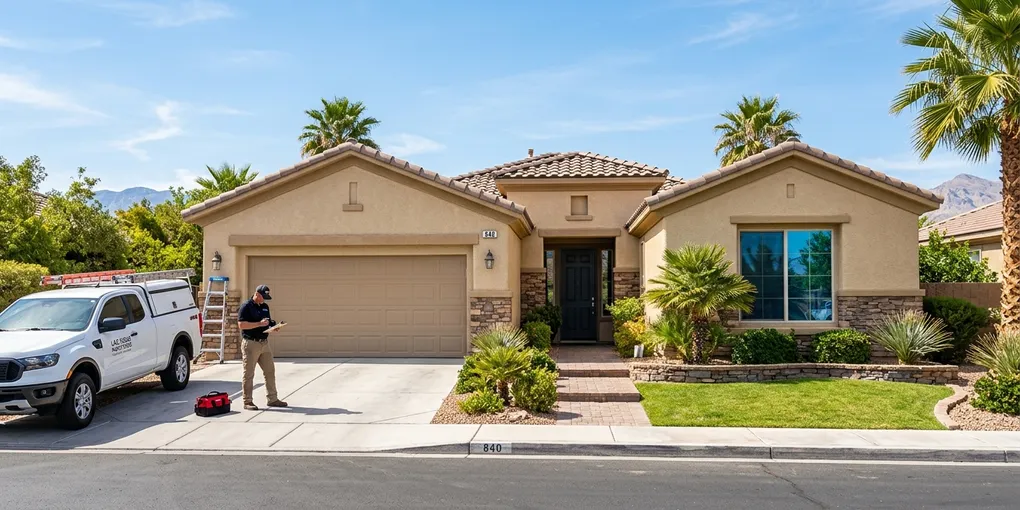
Las Vegas, NV Termite Disclosures: Spotting Hidden Slab & Stucco Damage Before Closing
One of the most expensive myths in Clark County real estate is that 110°F Mojave Desert summers prevent termites in Las Vegas. Buyers touring stucco tract homes in Summerlin, Henderson, Green Valley, Spring Valley, or Centennial Hills rarely think about wood-destroying insects—after all, the exterior looks like concrete tile, stucco, and desert rock xeriscaping.
Beneath that stucco shell, nearly every residential home in the Las Vegas Valley is framed with kiln-dried softwood studs, OSB sheathing, and engineered wood roof trusses sitting atop an irrigated concrete slab. Subterranean and desert drywood termites cause millions of dollars in hidden framing damage across Southern Nevada every year—and Nevada’s strict statutory disclosure penalties give informed buyers major leverage during due diligence.
How Termites Attack Stucco & Post-Tension Slab Homes in Las Vegas
Three desert construction factors explain why Las Vegas properties develop concealed infestations:
1. Post-Tension Slab Penetrations & Drip-Irrigation Oasis Zones
While native Mojave caliche is bone-dry, residential drip emitters around palm trees, oleanders, and courtyard planters maintain a permanent moisture ring right against foundation edges. Arid-land and western subterranean termites follow plumbing sleeves (especially around ground-floor bathrooms and kitchen islands) straight up into interior wall baseplates—without ever exposing a mud tube on the outside stucco!
2. Stucco Foam Trim & Weep Screed Bridges
Decorative EPS foam pop-outs around windows, garage headers, and parapet walls are ubiquitous across 1990s–2020s Las Vegas subdivisions. When stucco or foam extends down into gravel/soil below the metal weep screed, subterranean termites tunnel up inside the foam insulation completely out of sight of visual inspectors.
3. Older Classic Vegas Neighborhoods (Scotch 80s, Paradise Palms, Huntridge & McNeil)
Mid-century custom homes near Downtown and the Strip feature mature flood-irrigated lawns, older additions, and aging wood patio covers—prime territory for both subterranean colonies and desert drywood termites in exposed roof eaves.
Reviewing a Las Vegas SRPD Disclosure or Inspection Packet?
Upload your Nevada Seller's Real Property Disclosure, HOA resale package, and inspection PDFs to DisclosurePro AI to catch hidden defects and calculate repair credits in seconds. Analyze your 1st property free.
Nevada’s Strict Disclosure Law: NRS Chapter 113 & Treble Damages
Nevada has one of the toughest seller nondisclosure statutes in the United States:
- Seller’s Real Property Disclosure Form (SRPD): Under NRS 113.130, sellers must deliver a completed SRPD form at least 10 days before residential property is conveyed, answering explicit questions about whether they are aware of wood-destroying insects, fungi, dry rot, or past pest treatments.
- Treble (3×) Damages Statute (
NRS 113.150): Unlike states where buyers can only recover actual repair costs, under NRS 113.150(4), if a Nevada seller is aware of a defect and willfully fails to disclose it on the SRPD, the buyer may recover three times the amount necessary to repair or replace the defective part of the property, plus court costs and attorney’s fees!
Despite that stiff statutory penalty, proving actual prior seller knowledge after closing is still time-consuming and expensive—especially with investor flips or former rental properties where an out-of-state LLC claims it “never occupied the home.” Catching subtle clues during your Nevada Due Diligence Period (typically 10–15 days) is always smarter. See our breakdown of 5 seller disclosure red flags buyers miss.
Reading HOA Resale Packages in Las Vegas Master-Planned Communities
Roughly 60%+ of Las Vegas Valley homes belong to at least one HOA (and in Summerlin or Inspirada, often both a master association and a sub-association). If you are buying a townhome or condo:
- Check the Nevada HOA Resale Package (which must be delivered giving you a 5-calendar-day statutory cancellation window under NRS 116.4109) and scan the HOA Reserve Study and board minutes to verify whether exterior stucco/wood-trim pest damage is Association responsibility or Unit Owner responsibility—and whether the HOA has an active pest contract.
Typical Las Vegas Termite Inspection & Repair Costs
When negotiating a seller closing credit after inspection in Clark County, expect these licensed contractor ranges:
- Nevada Dept. of Agriculture Licensed WDO (NPMA-33) Inspection: $85 – $160
- Sub-Slab Drilling & Perimeter Termiticide Barrier Treatment: $1,000 – $2,300
- Baseboard, Drywall & Bottom-Plate Stud Framing Repair (Localized Interior Wall): $2,500 – $7,500
- Exterior Stucco Tear-Back, Structural Framing & Foam Trim Remediation: $5,500 – $15,000+
Frequently Asked Questions About Termites in Las Vegas, NV
Are termite inspections required for VA loans in Las Vegas?
Yes. In Clark County, VA-backed mortgages require a clean NPMA-33 Wood Destroying Insect Inspection performed by a pest control operator licensed by the Nevada Department of Agriculture, with any active infestation treated prior to loan funding.
How can I tell inside a Las Vegas home if subterranean termites are behind drywall?
Look closely along baseboards near downstairs bathrooms, laundry rooms, and patio sliders for pinhole mud spots popping through latex paint, faint blistering tracks that collapse like paper when pressed with a thumb, or discarded translucent wings near sunny window tracks after spring/monsoon rains.