
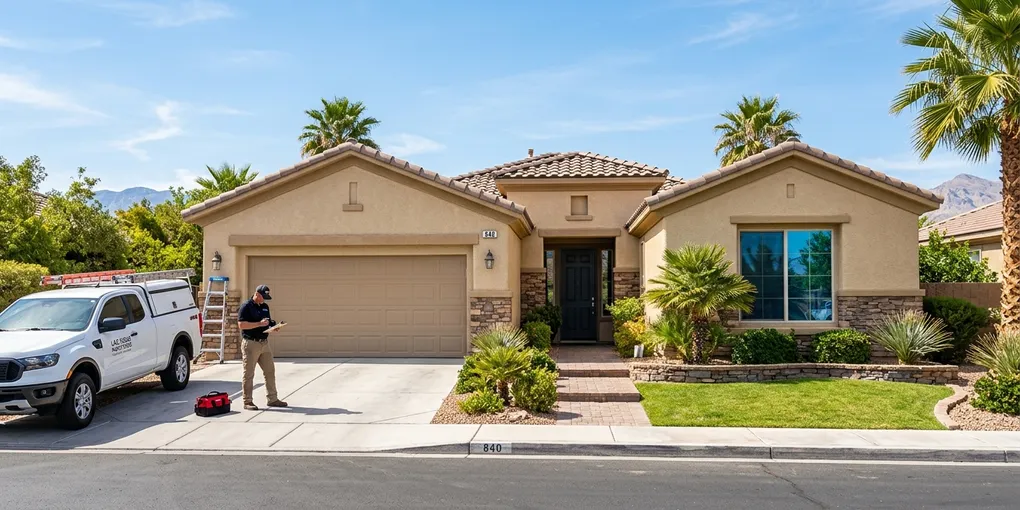
The Ultimate Guide to Spotting Roof Damage in Las Vegas Real Estate Disclosures
The Las Vegas Valley real estate market moves at an extraordinary velocity. From guard-gated luxury enclaves in Summerlin and MacDonald Highlands to master-planned family developments in Centennial Hills, Enterprise, and Henderson, buyers from across the nation are drawn to Southern Nevada for its favorable tax structure, year-round sunshine, and vibrant desert lifestyle.
Yet amidst the excitement of acquiring a home in Clark County, many buyers fall victim to a widespread myth: “Because it rarely rains in Las Vegas, residential roofs last forever.”
In reality, the brutal Mojave Desert climate creates one of the most punishing roofing environments in North America. While severe precipitation is infrequent, intense thermal cycling, relentless ultraviolet radiation, high-velocity spring winds, and sudden summer monsoonal flash floods subject residential roofing systems to extreme physical stress. Even more dangerous for buyers, roofing damage in Southern Nevada is frequently invisible from the street—tucked away beneath pristine concrete tiles or baking silently under blistering desert sun.
As an experienced Nevada real estate attorney and local real estate professional, I routinely represent buyers who inherit tens of thousands of dollars in hidden roofing failures because they relied on a superficial walk-through and missed subtle clues in the seller’s disclosure paperwork. In this guide, we analyze the engineering of desert roof failure, explain Nevada statutory disclosure requirements under NRS Chapter 113, and equip you to uncover hidden roofing liabilities before closing.
The Engineering of Desert Roof Degradation in Clark County
Understanding why Las Vegas roofs fail requires examining the materials commonly used across the valley and how extreme desert meteorology accelerates their breakdown.
The Concrete Tile Trap: Pristine Tiles, Disintegrated Underlayment
The overwhelming majority of single-family homes built in Las Vegas since the 1980s feature concrete or Spanish clay tile roofs. Concrete tiles have an exceptionally long lifespan—frequently exceeding 50 years. However, concrete tile is not a waterproof barrier; it is a water-shedding decorative shield.
The actual water-proofing membrane rests underneath the tiles:
- Underlayment Baking: In Las Vegas summers, ambient temperatures consistently exceed 110°F, driving attic and roof surface temperatures above 160°F. Under this relentless heat, standard organic asphalt-saturated felt underlayment (typically standard 30# felt) dries out rapidly. Volatile oils evaporate, causing the felt to turn brittle like potato chips within 15 to 20 years.
- Micro-Fractures and Slippage: When tiles shift due to thermal expansion or foot traffic from HVAC technicians and solar installers, the brittle felt beneath cracks. Rainwater runs off the tile, slips through the hairline fracture in the felt, and pools directly onto the plywood decking.
- Tile “Lift and Re-Felt” Requirement: Buyers often assume a 20-year-old tile roof in Summerlin looks “practically brand new.” In truth, the entire roof must undergo a complete “lift and relay”—where every tile is removed, brand-new synthetic self-adhering underlayment is installed, and the tiles are re-laid—a process costing tens of thousands of dollars.
Mojave Thermal Cycling and High Desert Microbursts
Las Vegas experiences dramatic diurnal temperature swings. During shoulder seasons and winter, day-to-night temperatures fluctuate by 35°F to 45°F within a twelve-hour window:
- Expansion and Contraction Fatigue: Constant thermal expansion breaks mortar beddings along hip and ridge caps. Once the mortar bonds crack, loose ridge tiles become projectile hazards during valley wind events.
- Monsoonal Deluges: During the July–August North American Monsoon, Las Vegas receives violent convective storms dropping two inches of torrential rain in under an hour, accompanied by 60-mph microburst winds. Water is blown horizontally underneath eaves, valleys, and wall flashings, overwhelming dry-rotted underlayment in minutes.
Parapet and Flat Foam Roofs in Mid-Century Modern Enclaves
In older Las Vegas neighborhoods such as the Scotch 80s, Paradise Palms, and Downtown vintage districts, low-slope and flat roofs with parapet walls are prevalent:
- Sprayed Polyurethane Foam (SPF) Degradation: SPF roofs require an elastomeric UV-reflective topcoat. In Southern Nevada’s intense UV environment, if this coating is not professionally reapplied every 5 to 7 years, solar radiation degrades the foam down to the substrate, leading to chronic pooling and water intrusion.
- Scupper and Drain Blockages: Wind-blown desert sand and palm fronds regularly clog parapet scuppers, transforming flat roof decks into miniature retention ponds during sudden summer flash floods.
Tired of manually reading 200-page disclosures?
Let DisclosurePro AI scan your documents for hidden termite damage, structural issues, and unpermitted work in 10 seconds. Try it free today.
Nevada Real Estate Disclosure Laws: NRS 113.130 Explained
Nevada provides meaningful statutory protections for homebuyers, but these laws only protect buyers who understand how to read between the lines of mandatory disclosures.
The Seller’s Real Property Disclosure (SRPD)
Pursuant to Nevada Revised Statutes (NRS) 113.130, a seller of residential property in Nevada must complete and deliver the statutory Seller’s Real Property Disclosure Form (SRPD) to the buyer at least 10 days prior to conveyance of the property:
- Systems and Structure Section: The seller is legally required to disclose known conditions regarding the roof, gutters, and downspouts. Specifically, the seller must check “Yes”, “No”, or “N/A” regarding whether any defects or malfunctions exist in the roof system.
- Water Intrusion and Flooding: The form mandates disclosure of past or present leaks, water damage, or pooling on roofs and ceilings.
- Repairs and Alterations: If a seller repaired a roof leak within their period of ownership, they must explain the repair, identify who completed it, and state whether the defect was completely resolved.
The Statutory “Known Defect” Standard and the Caveat
Under NRS 113.100–113.150, a seller is only obligated to disclose defects within their actual knowledge. If an investor acquired the property via foreclosure or inherited it through probate and never occupied the residence, they routinely check “No” across the SRPD, claiming no personal knowledge of attic moisture or underlayment breakdown.
Furthermore, Nevada allows buyers to rescind the purchase agreement if an undisclosed defect is discovered before closing. However, once escrow closes and deed recording takes place, recovering damages from a seller requires proving fraudulent concealment or intentional misrepresentation—an expensive, multi-year litigation uphill battle.
Evasive Terminology Common in Las Vegas Disclosures
Las Vegas sellers and listing agents frequently deploy subtle phrasing to sanitize serious roofing liabilities:
- “Tile roof regularly inspected and maintained” — Often masks that an inspector warned the felt underlayment had failed and only broken surface tiles were caulked.
- “Minor roof maintenance performed post-monsoon” — Obscures that water penetrated the attic envelope and saturated insulation.
- “Original builder-grade Spanish tile in excellent cosmetic condition” — Diverts attention from a 23-year-old underlayment that is at the end of its useful life.
- “Solar panels professionally installed in 2021” — Fails to disclose that solar lag bolts punctured the waterproofing membrane, voiding the underlying roof warranty.
The Manual Review Problem: Racing the Due Diligence Clock
In the Greater Las Vegas Association of REALTORS® (GLVAR) standard Residential Purchase Agreement, buyers typically negotiate a due diligence period of 10 to 14 days (and sometimes as brief as 5 to 7 days in competitive seller markets).
During this narrow timeframe, a homebuyer must thoroughly review:
- The multi-page statutory SRPD disclosure form.
- The 50-to-80-page comprehensive home inspection report.
- Master-association and sub-association CC&Rs, bylaws, and financial reserve studies (especially critical in communities like Summerlin, Mountain’s Edge, or Southern Highlands).
- Solar panel lease agreements, power purchase agreements (PPAs), and roof attachment warranties.
- Clark County Department of Building & Fire Prevention permitting history to verify whether unpermitted roof alterations took place.
Because home inspectors generally do not lift tiles to inspect underlying paper membranes—and frequently disclaim tile roofs as “inspected from ground level or eaves only due to tile breakage risk”—critical underlayment dry-rot is routinely missed. Buyers who manually scan dense PDF files amidst escrow stress can easily miss a single handwritten note noting “past ceiling stain in secondary bedroom repainted.”
Financial Impact: A Real-World Summerlin North Case Study
To illustrate the severe financial consequences of an overlooked roof disclosure, consider this realistic scenario from a purchase in Summerlin North.
The Acquisition
Marcus and Danielle purchased a 2,800-square-foot Spanish Mediterranean-style residence in Summerlin North for $815,000. Built in 2003, the home showcased stunning curb appeal with barrel clay tiles.
On the Nevada SRPD, the seller checked “No” to roof defects, adding a brief note: “Replaced two cracked roof tiles in 2024 following high winds; no active leaks.” The general home inspector walked the lower roof perimeter and reported: “Clay tiles appear intact and aligned; no visible ceiling moisture detected with moisture meter.” Reassured by the clean report, Marcus and Danielle finalized the purchase.
The Monsoon Disaster
Nine months later, an intense August monsoon storm stalled over the western foothills of the Las Vegas Valley, dumping 1.8 inches of rain with 55-mph sustained wind gusts.
At 2:00 AM, water began dripping through recessed lighting fixtures in the master suite and the great room ceiling. Marcus climbed into the attic crawlspace and discovered widespread water pouring through rotted OSB roof sheathing.
A licensed Nevada roofing contractor arrived the following day and completed a comprehensive destructive evaluation:
- The 2003 underlayment consisted of entry-level 30# organic felt that had completely calcified, disintegrated, and shredded across both western and southern exposures.
- The seller’s 2024 “tile replacement” had actually been performed by an unlicensed handyman who smeared silicone caulk over torn underlayment directly beneath a primary drainage valley.
- The standing water had saturated blown-in fiberglass attic insulation and sparked aggressive fungal growth across the drywall ceiling backing.
The Financial Devastation
Because the seller claimed they had no engineering knowledge of underlayment status, Marcus and Danielle could not prove intentional fraud without costly litigation. They were forced to finance the full restoration out-of-pocket:
| Expense Item | Cost |
|---|---|
| Full lift and relay of existing clay barrel tiles on 3,400 sq. ft. roof surface | $24,500 |
| Replacement of dry-rotted OSB decking sheets and perimeter fascia boards | $4,800 |
| Premium double-layer high-temp synthetic SBS modified underlayment installation | $7,200 |
| Attic mold remediation and HEPA environmental clearance testing | $5,400 |
| Master bedroom and great room drywall teardown, re-texturing, and painting | $6,100 |
| Clark County residential roofing permits and municipal inspection fees | $950 |
| Total Devastation | $48,950 |
Frequently Asked Questions about Roof Issues in Las Vegas
1. How long does a tile roof underlayment typically last in Las Vegas?
While concrete and clay tiles can last 50 years or more, the underlying asphalt felt underlayment typically fails within 15 to 22 years in the Las Vegas climate. The extreme attic heat (often exceeding 160°F) bakes organic felt until it loses all flexibility. Today, modern synthetic SBS-modified self-adhering underlayments are strongly recommended, offering lifespans exceeding 30 years under desert conditions.
2. Why don’t home inspectors walk on tile roofs during a Las Vegas inspection?
Standard home inspection guidelines (including InterNACHI and ASHI standards) allow inspectors to refrain from walking on clay and concrete tile roofs because walking on them creates a severe risk of cracking tiles, which damages the roof and poses liability. Consequently, many Las Vegas home inspectors inspect tile roofs from the ladder eaves or with a drone. This means they cannot lift tiles to inspect the underlying felt paper, making a dedicated inspection by a licensed C-15 roofing contractor essential.
3. What should I look for in disclosures if the Las Vegas home has solar panels?
You must inspect Section 1 of the SRPD alongside the solar installation contract and permit history. In Las Vegas, solar installers frequently secure racking systems directly through roof tiles into rafters using lag bolts. If installers failed to use proper tile flashings or cracked underlying felt during installation, leaks frequently emerge several seasons later. Ensure that the solar contractor holds an active Nevada contractor license and provided an independent roof penetration warranty.
4. Does Nevada law require a seller to replace a roof that has reached the end of its useful life?
No. Nevada law does not mandate that a seller replace an aging roof or upgrade outdated materials, provided there are no active undisclosed leaks or latent defects intentionally concealed on the SRPD. However, discovering that an underlayment is failing during your contractual due diligence period gives you powerful leverage to negotiate a price reduction, request a seller closing credit, or cancel the contract and recover your earnest money deposit.