
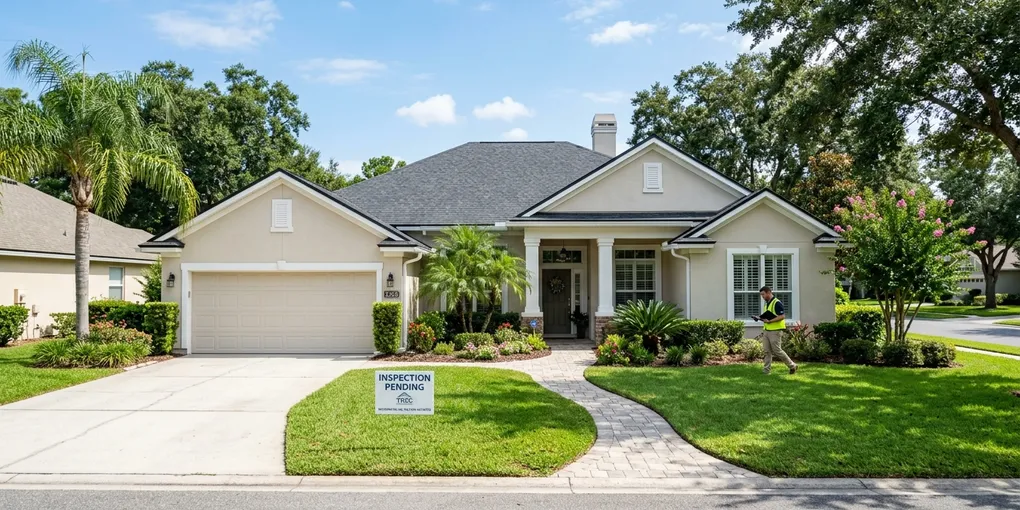
The Ultimate Guide to Spotting Roof Damage in Jacksonville Real Estate Disclosures
Jacksonville represents one of Florida’s most expansive and attractive real estate markets. As the largest city by land area in the contiguous United States, Northeast Florida offers a rich tapestry of neighborhoods: historic riverfront Craftsman bungalows and Mediterranean revivals in Riverside and Avondale, elegant tree-lined streets in San Marco, master-planned family developments in Mandarin, and vibrant coastal retreats throughout Jacksonville Beach and Atlantic Beach.
Yet, purchasing a residential property along Florida’s First Coast involves navigating an extraordinary structural and financial obstacle: the roof.
In Florida, the condition of a residential roof is not merely a matter of stopping water from dripping into the living room—it is the single deciding factor in whether a home can secure homeowner’s insurance and obtain mortgage financing. Jacksonville’s humid subtropical climate subjects roofs to intense ultraviolet radiation, corrosive coastal salt spray, pervasive blue-green algae infestations, and seasonal tropical storms and hurricanes delivering driving rain and gale-force winds.
As an experienced Florida real estate attorney and active Jacksonville broker, I routinely see excited homebuyers overlook vague or evasive roof disclosures, only to find themselves uninsurable and facing tens of thousands of dollars in emergency replacements. In this comprehensive guide, we examine how Jacksonville’s climate attacks roofing assemblies, unpack Florida’s landmark legal disclosure standards, and reveal how to spot costly red flags before closing.
The Anatomy of Jacksonville Roof Degradation: Hurricanes, Humidity, and Salt Spray
Evaluating a residential roof in Duval County requires looking closely at how Northeast Florida’s environment breaks down common roofing materials.
Wind-Driven Rain and Tropical Storm Scouring
Jacksonville is regularly impacted by Atlantic tropical weather systems. Even storms passing offshore deliver severe gusts and sustained tropical-storm-force winds:
- Shingle Tab Uplift: Strong wind gusts break the thermal adhesive seal strips binding architectural asphalt shingles. Once lifted, wind drives sheets of water upward underneath the shingles (wind-driven rain).
- Secondary Water Barrier Failures: In older homes built before Florida’s updated building codes, underlayment was installed with standard roofing nails without synthetic self-adhering membranes. If shingles blow off, water penetrates nail penetrations directly into the plywood decking.
Extreme Humidity and Biological Infestation
With summer humidity routinely hovering above 80%, biological growth is an aggressive threat across Jacksonville:
- Gloeocapsa Magma (Black Algae): Those unsightly black streaks on Jacksonville roofs are colonies of airborne cyanobacteria. Algae feed on the calcium carbonate limestone filler within asphalt shingles. Over time, this bacterial feast destroys shingle moisture resistance and causes accelerated granule shedding.
- Lichen and Moss Roots: In shaded neighborhoods like Riverside, live oak canopies create damp conditions where moss and lichen thrive. Moss roots physically anchor into the asphalt substrate, lifting shingle edges and creating capillary channels that suck moisture beneath courses.
Coastal Salt Air Corrosion
Properties situated within five to ten miles of the Atlantic coastline (including Mayport, Atlantic Beach, and Neptune Beach) face continuous exposure to aerosolized salt:
- Fastener Rust: Standard electro-galvanized roofing nails corrode into brittle rust spikes, losing their holding power and allowing decking sheathing to pull loose in high winds.
- Metal Flashing Degradation: Valley flashings, drip edges, and chimney cricket metals oxidize rapidly unless crafted from heavy-gauge aluminum, stainless steel, or lead-coated copper.
Tired of manually reading 200-page disclosures?
Let DisclosurePro AI scan your documents for hidden termite damage, structural issues, and unpermitted work in 10 seconds. Try it free today.
Navigating Florida Real Estate Disclosure Laws in Jacksonville
Florida law regarding real estate property condition disclosure is grounded in one of the most famous judicial decisions in American property jurisprudence.
The Landmark Johnson v. Davis Doctrine
In the landmark 1985 case Johnson v. Davis (480 So. 2d 625), the Florida Supreme Court established a strict affirmative duty of disclosure:
“Where the seller of a home knows of facts materially affecting the value of the property which are not readily observable and are not known to the buyer, the seller is under a duty to disclose them to the buyer.”
This legal doctrine applies to all residential sales in Florida, even when the transaction uses the standard Florida Realtors / Florida Bar “AS IS” Residential Contract for Sale and Purchase. Inserting an “as-is” clause does not relieve a Florida seller of liability if they knowingly fail to disclose an active roof leak, past water damage, or structural decking rot.
The Florida Seller’s Property Disclosure - Residential (SPDR)
In standard transactions, sellers provide the comprehensive SPDR form, answering detailed inquiries:
- Roof Section: Inquires about the Age of the Roof, whether the roof was Replaced or Repaired during ownership, and if there are known Active Leaks, Water Damage, or Structural Defects.
- Insurance Claims Section: Asks whether any past insurance claims have been filed for hurricane, wind, or hail damage.
- Permit Compliance: Requires disclosure of whether necessary building permits were pulled and closed with the City of Jacksonville Building Inspection Division.
The Florida Property Insurance Crisis: The 10-to-15 Year Cutoff
Understanding Florida roof disclosures requires understanding the state’s property insurance market. Florida homeowners insurance carriers (including Citizens Property Insurance Corporation) have instituted strict underwriting guidelines:
- If an asphalt shingle roof is older than 10 to 15 years, many insurance companies will refuse to write a policy or demand a complete roof replacement within 30 days of closing.
- Buyers cannot secure a mortgage without binding homeowner’s insurance. If a seller conceals that the roof is 16 years old, the transaction can collapse days before closing when the insurance underwriter rejects the property.
Deceptive Language Used by Jacksonville Sellers
Sellers frequently utilize ambiguous phrasing to minimize known roofing liabilities:
- “Roof cleaned and professionally sealed in 2024” (often a chemical pressure-wash that stripped remaining ceramic granules, masking active leaks).
- “Roof functional; no interior water intrusion observed” (omitting that attic framing is covered in moisture stains and rot).
- “Roof age estimated at 8 years” (claiming ignorance when city permit records reveal the roof was installed 18 years prior).
- “Seller acquired property via inheritance; has never occupied” (attempting to claim total ignorance on the SPDR).
The Manual Review Problem: Deciphering the 4-Point and Wind Mitigation Reports
In Jacksonville, buyers are forced to evaluate far more than just a standard home inspection report during their 10-to-15 day inspection window:
- The standard Florida Seller’s Property Disclosure (SPDR).
- The 4-Point Inspection Report (evaluating Roof, Electrical, Plumbing, and HVAC specifically for insurance underwriters).
- The Uniform Mitigation Verification Inspection Form (Wind Mitigation Report) (evaluating roof geometry, roof-to-wall attachments like clips/straps, and secondary water barriers).
- City of Jacksonville (COJ) building permit histories.
- HOA / CDD disclosure packets.
Insurance underwriters examine the 4-Point Inspection’s “Remaining Useful Life” estimation. If an inspector checks that a roof has “under 3 years of useful life,” insurance will be denied. Unassisted buyers reviewing dozens of technical insurance and inspection pages under pressure frequently overlook discrepancies between what the seller claimed on the SPDR and what the Wind Mitigation report documents.
Financial Impact: A Real-World Mandarin Case Study
To understand how dangerous a masked roof disclosure can be in Jacksonville, consider this realistic scenario from a home purchase in Mandarin.
The Acquisition
Greg and Amanda purchased a 1988 brick ranch home in Mandarin for $465,000. On the SPDR form, the seller marked the roof type as “Architectural Shingle,” stated the age was “Approx. 9 years,” and checked “No” to active leaks or structural damage. Under repairs, the seller wrote: “Minor shingle maintenance after recent storm.”
The buyer’s general home inspector conducted a routine inspection. The day was sunny and dry. The inspector noted: “Roof surface shows normal cosmetic granular wear; no active leaks seen on ceiling drywall.” Greg and Amanda finalized the purchase.
The Disaster
Three weeks after moving in, a late-season tropical disturbance pushed through Northeast Florida, dumping five inches of wind-driven rain over Jacksonville.
The next morning, Greg discovered water dripping through the ceiling fan in the master bedroom, while water marks bloomed across the dining room ceiling.
An emergency roofing contractor inspected the attic and exterior, uncovering a devastating series of concealed facts:
- The roof was not 9 years old. A search of City of Jacksonville permit records revealed the last permitted roof was installed in 2007—making the roof 19 years old.
- The seller’s “minor shingle maintenance” was an unlicensed, unpermitted patching job where cheap shingles were glued down over rotted plywood decking to conceal damage from a past hurricane claim.
- The insurance company dispatched an adjuster, who pulled the original 4-Point inspection and compared it to city permit databases. Finding material misrepresentation regarding roof age, the insurer cancelled the homeowner’s insurance policy with 30 days notice.
- Greg’s mortgage lender issued a warning that failure to maintain insurance would result in expensive “force-placed insurance” or loan acceleration.
The Financial Devastation
With their insurance policy revoked and an active leak threatening the home’s structural framing, Greg and Amanda had to pay for an emergency roof replacement:
| Expense Item | Cost |
|---|---|
| Emergency exterior shrink-wrapping and leak mitigation | $3,500 |
| Complete tear-off of 19-year-old shingles down to bare wood decking | $5,200 |
| Replacement of 16 rotted plywood decking sheets and damaged fascia boards | $6,800 |
| New architectural shingle system with secondary peel-and-stick water barrier | $16,500 |
| Hurricane clip retrofitting to meet Florida Building Code wind mitigation standards | $4,200 |
| Master bedroom and dining room ceiling drywall replacement and mold sanitization | $7,900 |
| City of Jacksonville building permit fees and mandatory engineering re-inspection | $1,500 |
| Total Devastation | $45,600 |
Frequently Asked Questions about Roof Issues in Jacksonville
1. What is a Florida Wind Mitigation Inspection, and why does it matter in Jacksonville?
A Wind Mitigation Inspection is an evaluation of a home’s structural resilience against hurricane-force winds. The inspector verifies roof covering age, roof deck attachment nail spacing, roof-to-wall connections (such as hurricane clips or double wraps), roof geometry (hip vs. gable), and secondary water resistance (peel-and-stick underlayment). A favorable wind mitigation report can save Jacksonville homeowners 30% to 50% annually on their property insurance premiums.
2. Can I get homeowner’s insurance in Jacksonville on a 15-year-old roof?
It is increasingly difficult. While Florida Senate Bill 2-D (enacted in 2022) prevents insurance companies from refusing to write a policy solely because a roof is under 15 years old if an authorized inspection shows at least five years of remaining life, many carriers still find underwriting loopholes or charge exorbitant rates. For roofs over 15 years old, private carriers routinely decline coverage, forcing buyers onto Citizens Property Insurance Corporation.
3. Does pressure washing a roof in Jacksonville cause damage?
Yes. High-pressure washing on asphalt shingles strips away the ceramic granules that protect the asphalt substrate from UV degradation. If a seller in Jacksonville hired an inexperienced cleaner to blast away black algae before putting the house on the market, the roof’s lifespan may have been dramatically slashed. Roofs should only be cleaned using low-pressure chemical “soft-wash” techniques.
4. How does the City of Jacksonville regulate roof replacements?
The City of Jacksonville Building Inspection Division strictly enforces the Florida Building Code (Residential). A building permit is required for any re-roofing project. The code mandates that if more than 25% of a roof assembly is repaired or replaced within a 12-month period, the entire roof must be brought up to current Florida Building Code standards, including enhanced secondary water barriers and hurricane-resistant fastening.