
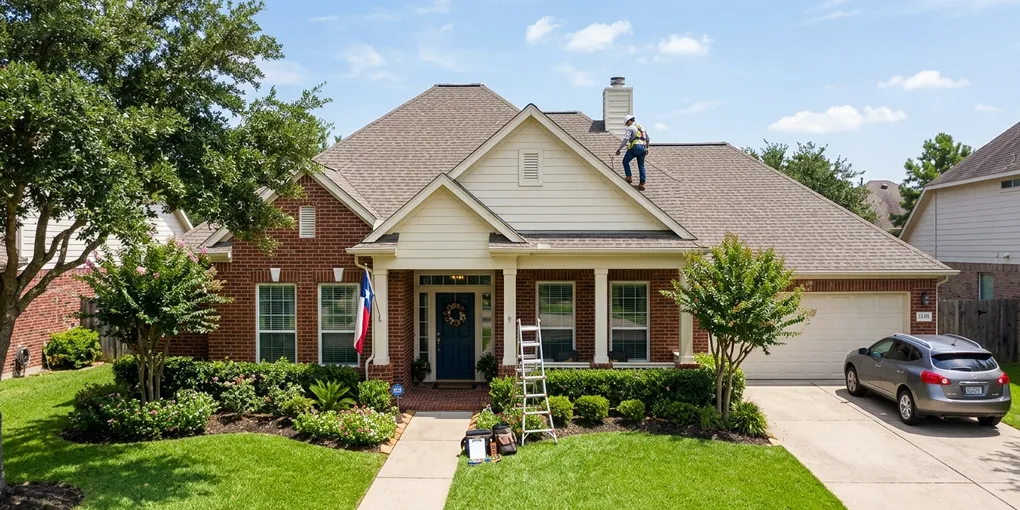
The Ultimate Guide to Spotting Roof Damage in Houston Real Estate Disclosures
The Houston residential real estate market offers incredible diversity—from historic Victorian and Craftsman cottages in the Houston Heights and stately mansions in River Oaks to sprawling suburban estates in Katy, Sugar Land, and The Woodlands. Yet whether you are buying an urban infill townhouse or a classic ranch-style home, there is one structural component that constantly faces severe environmental peril along the Texas Gulf Coast: the roof.
Houston is one of the most punishing roofing environments in North America. The combination of intense ultraviolet radiation, extreme summer heat, relentless humidity, convective severe hailstorms, and catastrophic tropical storms and hurricanes subjects roofing assemblies to continuous stress. When a Houston roof fails, torrential rains can penetrate an attic, saturate insulation, rot structural framing, and trigger aggressive toxic mold outbreaks in a matter of days.
Local real estate attorneys and buyer’s brokers regularly see how buyers navigaten far too many homebuyers celebrate at closing, only to face five-figure roof replacements shortly thereafter. In this comprehensive guide, we will unpack how Houston weather destroys roofs, analyze Texas disclosure statutes, and show you how to decode evasive statements in the Texas Seller’s Disclosure Notice before your option period expires.
The Elements Destroying Houston Roofs
To effectively evaluate a roof on a Houston property, a buyer must understand the specific environmental stressors that degrade roofing assemblies across Southeast Texas.
Extreme Heat and Ultraviolet Degradation
Houston experiences prolonged summer heatwaves where ambient temperatures frequently surpass 100°F. On an asphalt shingle roof, surface temperatures easily reach 150°F to 170°F:
- Asphalt Volatilization: Intense thermal baking causes the petroleum-based volatiles within asphalt shingles to evaporate. Over time, the asphalt becomes dry and brittle.
- Granule Loss: Protective mineral granules begin to shed, washing into gutters. Without granules, the underlying fiberglass mat is exposed directly to UV light, which rapidly dissolves the waterproofing core.
- Thermal Shock: Sudden afternoon thunderstorms drop cool rain onto superheated roofs. This rapid temperature drop induces violent thermal contraction, causing shingles to crack, curl, and blister.
Hailstorms and Convective Wind Damage
Houston sits squarely in a corridor vulnerable to violent convective thunderstorms that generate severe hail and straight-line winds:
- Hail Bruising and Fractures: Hail impacts rarely break shingles into visible pieces; instead, they create circular indentations that crush the mineral granules into the asphalt mat. These “bruises” are virtually invisible from the ground, but they destroy the water barrier and lead to leaks within 6 to 18 months.
- Wind Lift and Sealant Failure: High winds lift the edges of asphalt shingles, snapping the thermal adhesive seal strip. Once the seal is broken, wind-driven rain penetrates under the shingles and directly into the underlying decking.
High Humidity, Inadequate Ventilation, and Attic Rot
Houston’s average relative humidity often hovers between 75% and 90%. If an attic lacks adequate ridge and soffit ventilation:
- Moist, superheated air gets trapped inside the attic space.
- Condensation forms on the underside of the plywood or OSB roof decking.
- This creates an ideal breeding ground for wood-decay fungi and mold (Stachybotrys and Aspergillus), rotting the structural roof decking from the inside out while the shingles on top appear cosmetically intact.
Tired of manually reading 200-page disclosures?
Let DisclosurePro AI scan your documents for hidden termite damage, structural issues, and unpermitted work in 10 seconds. Try it free today.
Navigating Texas Real Estate Disclosure Laws
Texas law provides specific statutory protections regarding property disclosures, but understanding what sellers are legally obligated to disclose—and what they routinely omit—is critical.
Texas Property Code Section 5.008
Under Section 5.008 of the Texas Property Code, sellers of single-family residential properties must deliver a written Seller’s Disclosure Notice (commonly the Texas Real Estate Commission form TREC OP-H or Texas REALTORS® form TXR-1406):
- Section 4: Specifically asks the seller to state the Type of Roof, the Approximate Age of the Roof, and whether there are any known Defects or Malfunctions in the roof, ceilings, or chimney.
- Section 7: Inquires whether the seller is aware of any Unresolved Insurance Claims or previous claims filed for property damage (such as wind or hail damage claims).
- Previous Flooding and Water Penetration: The seller must state whether the property has ever experienced water penetration, roof leaks, or structural dampness.
The Pocketed Insurance Payout Problem
One of the most rampant issues in the Houston market involves insurance claims: A severe storm or hurricane sweeps through Houston, and the homeowner files a roof claim with their insurance company. The insurance carrier cuts a check for $25,000 to replace the damaged roof. Instead of replacing the roof, the homeowner spends $1,500 on a temporary patch and pockets the remaining $23,500.
When the homeowner decides to sell, they disclose “No active leaks,” concealing the fact that the insurance carrier officially deemed the roof total loss. If you buy this home, the property’s insurance history (recorded in the Comprehensive Loss Underwriting Exchange or C.L.U.E. database) may prevent you from obtaining affordable homeowner’s insurance, or any future claim on that roof will be denied.
Evasive Seller Phrasing
Houston sellers and real estate flippers frequently attempt to mask roof issues with vague wording:
- “Roof inspected after recent storm; minor maintenance performed” (often hiding severe widespread hail bruising).
- “New architectural shingles installed in 2021” (omitting that the new layer was illegally installed over rotted decking without a permit).
- “No known leaks during seller’s occupancy” (a common statement from absentee landlords or flippers to dodge knowledge).
- “Roof age unknown; appears in good working order” (deflecting inquiry away from a 20-year-old expired system).
The Manual Review Problem: Racing the Texas Option Period
In Texas real estate, buyers typically negotiate a contractual Option Period (under Paragraph 23 of the standard TREC One-to-Four Family Residential Contract). This option period usually lasts only 5 to 7 days, during which the buyer has the unrestricted right to terminate the contract.
During this frantic week, buyers must process an enormous volume of information:
- The multi-page Texas Seller’s Disclosure Notice.
- The C.L.U.E. insurance history report.
- The municipal permit history (City of Houston or Harris County records).
- Home inspection, wood-destroying insect (WDI), and HVAC inspection reports.
- HOA restrictive covenants and financial statements.
In the rush to negotiate repairs before the option deadline expires at 5:00 PM, buyers frequently miss critical discrepancies. For example, a buyer might notice that the seller listed the roof age as “6 years,” but fail to cross-reference page 4 of the inspection report noting three layers of shingles, or page 2 of the C.L.U.E. report showing an unsettled $18,000 windstorm claim from two years earlier.
Manual document review under strict time constraints leaves buyers vulnerable to expensive mistakes.
A Financial Nightmare: A Real-World Houston Heights Case Study
To understand the financial danger of missing an evasive roof disclosure, consider this realistic case study from a historic home purchase in the Houston Heights.
The Purchase
Ethan and Taylor purchased a renovated 1940s bungalow in the Houston Heights for $640,000. In Section 4 of the Texas Seller’s Disclosure Notice, the seller noted: “Roof: Composition Shingle, Age: 4 years, Defects: None.” In the insurance section, the seller checked “No” to unresolved claims.
During their 5-day option period, Ethan and Taylor hired a general home inspector. The inspector noted that the asphalt shingles appeared relatively new from a ladder at the roof edge, but could not safely walk the high-pitch gables. Reassured that the roof was only four years old, the couple closed the purchase.
The Disaster
Nine months later, a severe spring convective thunderstorm dropped four inches of rain accompanied by 60-mph gusts.
That night, water began pouring through the living room ceiling fan and soaking into the antique pine wood floors. When an emergency roofing specialist accessed the attic, a staggering scene was uncovered:
- The previous owner had indeed put on new shingles four years earlier, but had nailed them directly over two existing layers of old, rotted shingles to save on disposal fees (violating Houston Residential Building Code).
- The excessive weight of three shingle layers had caused the wooden rafters to deflect and sag by nearly two inches.
- The previous owner had previously filed an insurance claim for $22,000 after a hailstorm, received the payment, and hired an unlicensed handyman for $3,000 to overlay shingles without replacing the waterlogged decking.
- The attic insulation was completely saturated, with rampant black mold (Aspergillus) spreading across the rafters.
The Financial Devastation
Because the seller technically claimed the shingles were four years old without explicitly guaranteeing the decking, Ethan and Taylor faced an expensive legal battle under the Texas Deceptive Trade Practices Act (DTPA). In the meantime, they had to fund full structural remediation immediately:
| Expense Item | Cost |
|---|---|
| Emergency tarping and water extraction services | $3,200 |
| Hazardous tear-off and disposal of three layers of roofing | $12,500 |
| Replacement of rotted OSB/plywood decking and sistering sagging rafters | $14,800 |
| Installation of Class 4 impact-resistant architectural shingles and synthetic underlayment | $16,500 |
| Attic mold remediation, insulation replacement, and antimicrobial fogging | $8,500 |
| Restoration of damaged antique pine hardwood flooring and drywall ceilings | $11,200 |
| Total Devastation | $66,700 |
Frequently Asked Questions about Roof Issues in Houston
1. What is a Texas Windstorm Certificate (WPI-8) and does a Houston home need one?
In designated catastrophe areas along the Texas Gulf Coast (including coastal portions of Harris County and neighboring Brazoria, Chambers, and Galveston counties), roof replacements must be certified by a Texas Department of Insurance (TDI) windstorm inspector to obtain a Certificate of Compliance (WPI-8 or WPI-8-E). Without this certification, you may be completely ineligible for wind and hail coverage through the Texas Windstorm Insurance Association (TWIA). Always verify windstorm certificates during your due diligence.
2. Can I sue a seller in Texas for hiding roof defects after closing?
Yes. Under the Texas Deceptive Trade Practices-Consumer Protection Act (DTPA) and statutory fraud provisions in the Texas Business and Commerce Code, a seller who knowingly conceals material roof defects or makes false representations on the Seller’s Disclosure Notice can be held liable. If the seller acted with intent or actual awareness, the court may award treble damages (up to three times actual economic damages) plus attorney’s fees.
3. How long do asphalt shingle roofs actually last in Houston?
While manufacturers advertise 25- to 30-year warranties on architectural shingles, the harsh Houston climate (high UV exposure, thermal shock, and high humidity) typically reduces the actual useful life of an asphalt shingle roof to 15 to 18 years. Three-tab shingles often fail in 10 to 12 years.
4. What is a C.L.U.E. report, and why is it essential for checking roof condition?
A Comprehensive Loss Underwriting Exchange (C.L.U.E.) report details a property’s insurance claim history for the past five to seven years. It shows whether prior owners filed claims for wind, hail, or water damage, how much the insurance company paid, and whether repairs were officially confirmed. Requiring the seller to provide a C.L.U.E. report during your option period is critical to uncover pocketed roof insurance payouts.