
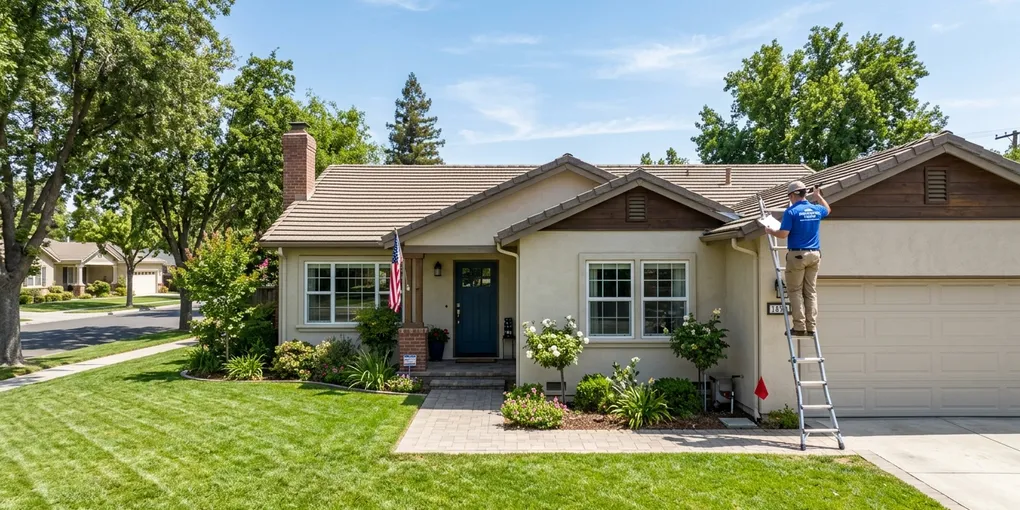
The Ultimate Guide to Spotting Roof Damage in Fresno Real Estate Disclosures
Fresno sits at the heart of California’s fertile San Joaquin Valley, offering homebuyers an exceptional balance of affordability, agricultural heritage, and classic Californian lifestyle. Whether you are shopping for a vintage 1920s Spanish Colonial Revival or Craftsman bungalow in the trendy Tower District or historic Old Fig Garden, a sprawling mid-century ranch home in Bullard or Sunnyside, or a contemporary executive residence in Woodward Park and Copper River, purchasing property in Fresno is a major financial step.
Yet, behind Fresno’s shaded fig trees, manicured lawns, and red tile rooflines lies a harsh environmental reality: the Central Valley climate creates an exceptionally punishing environment for residential roofing assemblies.
Fresno experiences one of the most extreme microclimates in California. From June through September, the valley is trapped in relentless triple-digit heatwaves—routinely logging weeks above 105°F—baking attics into thermal kilns. Then, from November through February, the valley is blanketed by dense, persistent Tule fog—a stagnant, near-freezing ground fog that traps moisture against roof decks for weeks without direct sunlight. This violent alternation between extreme thermal baking and prolonged winter moisture creates severe structural deterioration that sellers frequently gloss over on mandatory disclosure paperwork.
Local real estate attorneys and buyer’s brokers regularly see how buyers navigate buyers who inherit five-figure roofing disasters because they relied on superficial inspection summaries and failed to interpret subtle clues in the California Transfer Disclosure Statement (TDS). In this comprehensive guide, we unpack the mechanics of Central Valley roof breakdown, analyze California disclosure statutes under Civil Code § 1102, and show you exactly how to spot deceptive seller disclosures before your contingency period closes.
The Anatomy of Central Valley Roof Breakdown in Fresno County
To accurately evaluate a residential roof in Fresno, you must understand how extreme agricultural valley weather impacts common roofing materials.
The Thermal Bake and Cooked Tile Underlayment
Throughout Fresno’s newer master-planned developments in Woodward Park and Clovis borders, concrete and clay tile roofs are standard:
- Tiles Shield, Felt Waterproofs: While concrete tiles resist heat and can easily last 50 years, the waterproof felt membrane underneath does not.
- The “Potato Chip” Phenomenon: When outside temperatures reach 108°F, roof surface temperatures hit 165°F, and unventilated attics climb past 150°F. Under this continuous thermal baking, standard 30-pound asphalt-saturated organic felt dries out. Volatile oils evaporate, leaving the felt brittle, cracked, and fragile as a potato chip within 15 to 18 years.
- The “Lift and Re-Lay” Necessity: When tiles shift due to foot traffic or wind, water penetrates the tile gaps and hits cracked felt, leaking directly onto roof decking. Replacing this failed barrier requires a complete “lift and re-lay”—stripping all existing tiles, replacing rotted felt with modern synthetic underlayment, and reinstalling the tiles—a project that costs between $18,000 and $32,000.
Winter Tule Fog and Persistent Valley Rot
Unlike coastal California, Fresno endures winter Tule fog:
- Prolonged Moisture Retention: Tule fog keeps relative humidity near 100% for weeks at a time with virtually zero wind or solar drying. Shaded roof slopes, northern valleys, and areas beneath tree canopies remain damp for entire months.
- Moss, Lichen, and Fungal Colonization: Moisture trapped in valleys fosters aggressive moss and lichen colonies. Moss rootlets penetrate between shingle layers, lifting edges and holding trapped moisture against the roof decking.
- Agricultural Dust Sludge: During autumn almond and raisin harvesting, massive clouds of fine agricultural dust settle over Fresno rooftops. When winter rains and fog arrive, this dust turns into a thick, acidic sludge that chokes drainage valleys, clogs downspouts, and corrodes metal flashings.
Unpermitted Patio Extensions and Flashing Failures
In Fresno’s sunny climate, homeowners love building covered outdoor patios:
- Amateur Roof Tie-Ins: Handymen often nail patio covers directly into the house fascia or slip patio rafters under existing shingles without pulling City of Fresno building permits. These amateur tie-ins lack proper reverse-flashing, creating hidden avenues where winter rains leak behind exterior stucco and rot structural wall framing.
Tired of manually reading 200-page disclosures?
Let DisclosurePro AI scan your documents for hidden termite damage, structural issues, and unpermitted work in 10 seconds. Try it free today.
California Real Estate Disclosure Laws: Civil Code § 1102 & The TDS
California enforces some of the most comprehensive real estate disclosure statutes in the nation, but statutory protection is meaningless if buyers do not know how to read between the lines.
The Real Estate Transfer Disclosure Statement (TDS)
Under California Civil Code § 1102 et seq., sellers of residential real estate (1 to 4 units) must provide the buyer with the statutory Real Estate Transfer Disclosure Statement (TDS):
- Section II.A & II.B – Structural Items: The seller must state the approximate Roof Type and Age, and affirmatively declare whether there are any known defects or malfunctions in the roof, gutters, downspouts, ceilings, or walls.
- Section II.C – Material Defect Inquiries: The seller must disclose past roof leaks, repairs, water intrusions, or settling issues.
- Unpermitted Additions and Alterations: The seller must disclose whether room additions, structural modifications, or patio covers were completed without required municipal permits or building code compliance.
The Seller Property Questionnaire (SPQ)
In standard California Association of REALTORS® (C.A.R.) transactions, sellers must also complete the Seller Property Questionnaire (SPQ), which requires even more granular disclosures:
- Prior water intrusion, leaks, or flooding in the attic or living areas.
- History of insurance claims filed for storm, water, or roof damage.
- Specific contractor repairs performed on the roof during the seller’s ownership.
Agent Visual Inspection Disclosure (AVID)
Under California Civil Code § 2079, real estate licensees have an independent affirmative duty to conduct a reasonably competent and diligent visual inspection of accessible areas of the property and reveal material facts on the Agent Visual Inspection Disclosure (AVID) form. If an agent notices water staining on a ceiling or dry-rotted eaves and fails to document it, they face statutory liability.
Deceptive Language in Fresno Disclosures
Sellers and listing agents frequently deploy subtle phrasing to conceal serious roof conditions:
- “Tile roof original; inspected and serviced by roofer in 2024” — Masks that the roofer warned the underlayment was brittle and only broken surface tiles were sealed.
- “Minor ceiling discoloration in hallway from historical leak; repaired” — Obscures that the leak was never fixed and continues to seep through insulation.
- “Patio cover installed for shade; sold as-is” — Euphemism for an unpermitted patio addition that penetrates the roof membrane without flashings.
- “New composition shingles installed in 2022” — Hides that shingles were nailed over rotted decking without City of Fresno building permits or Title 24 cool-roof energy certification.
The Manual Review Problem: Navigating California’s 17-Day Contingency Window
In standard C.A.R. Residential Purchase Agreements (RPA), buyers typically have a 17-day inspection contingency period (often negotiated down to 10 or 14 days).
During this window, a buyer must digest an overwhelming mountain of paperwork:
- The multi-page statutory TDS, SPQ, and buyer/seller AVID forms.
- The 60-to-100-page comprehensive home inspection report.
- The Structural Pest Control Inspection Report (Section 1 and Section 2 wood-destroying organism report, detailing dry rot in roof eaves and fascia).
- The Natural Hazard Disclosure (NHD) statement.
- City of Fresno Planning & Development Department permit records to verify whether reroofing permits were pulled and passed final inspection.
- California Title 24 Energy Code compliance documents (verifying solar reflectance “cool roof” ratings).
Because climbing onto high, two-story tile roofs is hazardous, home inspectors routinely include disclaimers: “Tile roof inspected from ground level with binoculars; underlayment condition not verified.” If an overwhelmed buyer skimming through 200 pages misses that the termite inspector identified thousands of dollars in Section 1 dry rot in the roof rafter tails, they are left holding the financial bag.
Financial Impact: A Real-World Old Fig Garden Case Study
To understand the severe financial exposure of an overlooked roof disclosure, consider this realistic scenario from a purchase in Fresno’s historic Old Fig Garden neighborhood.
The Acquisition
Derek and Melissa purchased a charming 1936 Spanish Colonial Revival home in Old Fig Garden for $675,000. The property featured classic barrel clay tiles, a stucco courtyard, and a covered back patio for outdoor entertaining.
On the California TDS, the seller checked “No” to roof defects, noting: “Roof inspected and routine maintenance performed in spring 2024; no active leaks.” The general home inspector inspected the roof from an eave ladder, reporting: “Clay tiles appear aligned; no active moisture detected in plaster ceilings.” Reassured by the clean report, Derek and Melissa completed their purchase.
The Winter Atmospheric River Disaster
The following January, an atmospheric river storm stalled over the Central Valley, dropping 3.5 inches of rain over three days, followed by two weeks of dense, freezing Tule fog.
During the third night of rain, water began dripping through the plaster ceiling in the formal living room and running down the wall in the family room addition. Derek climbed into the crawlspace and discovered water pouring through decayed roof decking.
A licensed Fresno C-39 roofing contractor performed an invasive inspection and discovered catastrophic hidden defects:
- The original clay tile roof was installed over 30# organic felt that had completely disintegrated from 90 years of summer baking, leaving large sections of raw tongue-and-groove decking exposed to moisture.
- The seller’s “2024 routine maintenance” had been performed by an unlicensed handyman who smeared roofing tar over cracked tiles without repairing the underlying felt.
- The covered patio had been nailed directly into the exterior wall framing without flashing, allowing water from the atmospheric river to track backward into the home’s structural framing.
- Persistent dampness from Tule fog had fostered extensive black mold across attic rafters and saturated plaster lath throughout two rooms.
The Financial Devastation
Because the seller claimed they had relied on the handyman’s assurances, proving intentional fraud in court would have required months of costly litigation. Derek and Melissa paid for structural reconstruction out-of-pocket:
| Expense Item | Cost |
|---|---|
| Complete lift, cleaning, and relay of original Spanish clay tiles | $18,400 |
| Replacement of dry-rotted tongue-and-groove wood decking and rafter tails | $6,800 |
| Installation of dual-layer high-temp SBS rubberized synthetic underlayment | $6,900 |
| Demolition and code-compliant reconstruction of unpermitted patio roof tie-in | $5,200 |
| Professional attic mold remediation and HEPA environmental clearance | $4,300 |
| Historic plaster restoration, interior drywall reconstruction, and painting | $3,500 |
| City of Fresno building permits and California Title 24 cool-roof certification | $600 |
| Total Devastation | $45,700 |
Frequently Asked Questions about Roof Issues in Fresno
1. Does California Title 24 apply to roof replacements in Fresno?
Yes. Under the California Building Standards Code (Title 24, Part 6), residential roof replacements in Fresno (Climate Zone 13) must comply with “Cool Roof” energy efficiency requirements. When replacing more than 50% of an existing roof, shingles or tiles must meet specific Solar Reflectance Index (SRI) values to reduce attic heat gain, or the contractor must install code-compliant radiant barriers or increased ceiling insulation.
2. How long does a tile roof underlayment last in Fresno’s climate?
While clay and concrete tiles last 50 to 100 years, standard organic asphalt felt underlayment in Fresno typically fails within 15 to 20 years due to extreme 105°F+ summer attic heat. Modern high-temperature synthetic SBS-modified underlayments are strongly recommended, offering lifespans of 30+ years under Central Valley conditions.
3. What is the difference between Section 1 and Section 2 roof rot on a California Pest Report?
In California, a Structural Pest Control (Termite) Report divides issues into two categories:
- Section 1 Items: Active infestations or active wood decay/dry rot (e.g., fungus rotted rafter tails or water-damaged fascia boards). In standard purchase contracts, buyers routinely negotiate for sellers to pay for Section 1 repairs before closing.
- Section 2 Items: Conditions likely to lead to future rot (e.g., faulty flashing, standing water in gutters, or earth-to-wood contact). Identifying Section 2 items during due diligence is crucial to prevent expensive future failures.
4. What should I do if a seller refuses to credit for a failing roof during the 17-day contingency period?
If your independent roof inspection reveals that the roof is at the end of its useful life or requires a costly lift-and-relay, submit a formal Request for Repair (C.A.R. Form RR) asking for a price reduction, seller credit toward closing costs, or full repair by a licensed C-39 roofing contractor. If the seller refuses, you have the legal right under the RPA to cancel the contract within your contingency period and receive a prompt, full refund of your earnest money deposit.