
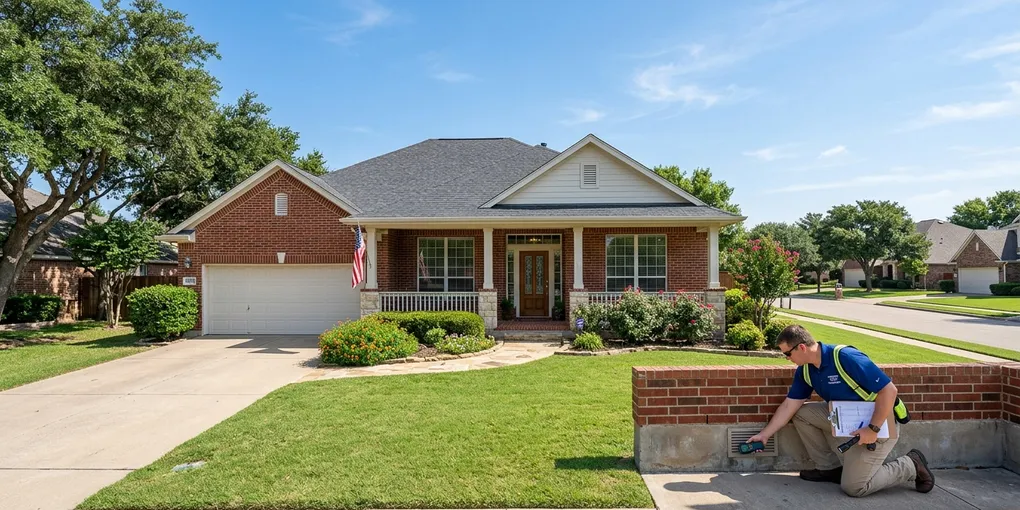
The Ultimate Guide to Spotting Roof Damage in Fort Worth Real Estate Disclosures
Fort Worth proudly embraces its rich Western heritage while driving one of the most vibrant housing markets in the American Sunbelt. From the historic early-20th-century Craftsman bungalows and Queen Anne cottages of the Fairmount National Historic District to the stately luxury estates of Rivercrest and Westover Hills, mid-century ranch homes in Ridglea Hills, and booming master-planned communities across North Fort Worth and Alliance, Cowtown offers exceptional quality of life.
However, behind the welcoming front porches and classic brick-and-limestone facades lies a structural threat that no North Texas homeowner can ignore: the volatile regional weather that ravages residential roofs.
Fort Worth is situated squarely in the heart of the southern hail belt. Tarrant County has witnessed some of the most destructive convective weather events in American meteorological history—most notably the historic Mayfest hailstorm and relentless annual spring supercells dropping baseball-sized hail and generating 70-mph straight-line winds. Combined with triple-digit summer heatwaves that bake attics into thermal ovens, a Fort Worth roof is subjected to continuous physical and thermal trauma.
As a practicing Texas real estate attorney and active Fort Worth broker, I routinely see buyers fall in love with cosmetic interior upgrades while glossing over cryptic or evasive roof disclosures. In this comprehensive guide, we examine how North Texas weather compromises roofing systems, analyze the legal obligations of Texas disclosure statutes, and explain how to spot catastrophic red flags before your contractual option period expires.
The Anatomy of Fort Worth Roof Degradation: Hail, High Winds, and Heat
Evaluating a residential roof in Tarrant County requires looking beyond surface aesthetics to understand how severe weather attacks roofing assemblies.
Severe Hail Impact: Sub-Surface Fracturing
In Fort Worth, severe thunderstorms frequently drop hailstones ranging from one to three inches in diameter:
- Bruising the Fiberglass Core: While hailstones immediately displace surface ceramic granules, the most dangerous damage is hidden beneath. Large hailstones deliver enough kinetic energy to fracture the flexible fiberglass mat inside architectural shingles. Even if the shingle appears intact from the street, water penetrates the micro-fractures during subsequent rain events.
- Premature Granule Shedding: Displaced granules leave the underlying asphalt exposed directly to sunlight. Within 12 to 18 months of intense UV exposure, the raw asphalt dries out, shrinks, and cracks, causing sudden, widespread leaks long after the storm has ended.
High-Wind Uplift and Creased Tabs
North Texas thunderstorms frequently generate powerful microbursts and straight-line winds exceeding 65 mph:
- Sealant Bond Failure: Strong wind shear lifts the leading edge of asphalt shingles, breaking the factory-applied thermal sealant strip.
- Creased Shingle Tabs: Once the adhesive bond fails, repeated wind gusts flap the shingle back and forth, creasing the top of the tab. A creased shingle permanently loses its water-shedding geometry and will easily blow off during future storms.
Triple-Digit Summer Baking and Thermal Shock
Fort Worth summers routinely produce weeks of continuous 100°F+ temperatures. Roof surfaces can reach blistering temperatures of 160°F to 175°F:
- Thermal Blistering: Trapped moisture or volatile solvents within the asphalt expand rapidly under extreme heat, bursting through the surface to create small craters known as thermal blisters.
- Attic Heat Retention: In older Fort Worth homes lacking continuous ridge-and-soffit ventilation, superheated attic air cooks asphalt shingles from below. This cooks off the volatile asphalt oils, leaving organic felt underlayment dry, brittle, and unable to resist wind-driven moisture.
Tired of manually reading 200-page disclosures?
Let DisclosurePro AI scan your documents for hidden termite damage, structural issues, and unpermitted work in 10 seconds. Try it free today.
Navigating Texas Real Estate Disclosure Laws in Fort Worth
Texas statutes provide clear consumer disclosure protections, but buyers must understand how sellers routinely maneuver around statutory disclosure forms.
Texas Property Code Section 5.008
Under Section 5.008 of the Texas Property Code, sellers of single-family residences must complete and deliver the Seller’s Disclosure Notice (standardized via Texas Real Estate Commission form TREC OP-H or Texas REALTORS® form TXR-1406):
- Section 4: Requires the seller to declare the Roof Type, Approximate Age of the Roof, and explicitly disclose whether they are aware of any Defects or Malfunctions in the roof, ceilings, walls, or chimneys.
- Section 7: Specifically inquires whether the seller is aware of any Unresolved Insurance Claims or previous property damage claims (such as wind or hail insurance settlements).
- Water Penetration History: Demands disclosure of any past or present water intrusion affecting the roof structure or attic space.
The Pocketed Insurance Payout Trap in Tarrant County
One of the most rampant disclosure schemes in the Fort Worth market involves storm insurance settlements:
- A severe hailstorm sweeps through a Fort Worth neighborhood. The homeowner files an insurance claim with their carrier.
- The insurance adjuster inspects the roof, determines that it sustained total hail loss, and cuts a settlement check for $26,000 to replace the roof.
- Rather than hiring a licensed roofing contractor to replace the roof, the homeowner spends $1,000 on cosmetic roof sealant and pockets the remaining $25,000.
- When selling the property, the seller checks “No known active leaks” on the Seller’s Disclosure Notice and conceals the hail payout.
The Catastrophic Outcome for the Buyer: When the buyer purchases the property and attempts to secure homeowner’s insurance, the carrier checks the C.L.U.E. (Comprehensive Loss Underwriting Exchange) database. The insurance company sees that a total-loss hail claim was paid out on that address and was never verified as repaired. The insurer will either refuse to insure the property or place a pre-existing damage exclusion on the policy—meaning if future storms destroy the roof, the new owner cannot collect a single dollar.
Deceptive Language Used by Fort Worth Sellers
Sellers and flippers often use carefully crafted phrasing to minimize serious roof defects:
- “Roof inspected by roofer in 2024; minor tune-up completed” (concealing that the roofer stated the shingles had zero remaining useful life).
- “New roof installed in 2021” (omitting that shingles were nailed over rotted decking without City of Fort Worth building permits).
- “No known leaks during seller’s ownership” (a common dodge used by investors and absentee landlords who never inspected the attic).
- “Roof age estimated at 7 years” (feigning ignorance when city permit records reveal the roof is 18 years old).
The Manual Review Problem: Racing the Texas Option Period
In Texas residential real estate, buyers purchase a contractual Option Period (governed by Paragraph 23 of the standard TREC contract). In Fort Worth, this option period typically lasts only 5 to 7 days.
During this compressed timeframe, prospective buyers must digest a staggering volume of technical documentation:
- The Seller’s Disclosure Notice and accompanying property questionnaires.
- The property’s C.L.U.E. insurance loss history report.
- The general physical home inspection report (often 50 to 80 pages).
- City of Fort Worth Development Services Department building permit records.
- Historic district preservation guidelines (for homes in Fairmount or the Stockyards).
Crucial roof warnings are easily buried in low-resolution scanned PDFs or brief inspector notes. For example, a home inspector might write in a photo caption on page 49: “Observed missing drip edge and multiple fractured shingle mats along south slope; recommend evaluation by licensed roofer.” If a buyer glosses over this detail, their option period will lapse, leaving them legally obligated to purchase a condemned roof.
Financial Impact: A Real-World Fairmount Case Study
To understand the severe financial exposure of a missed roof disclosure, consider this realistic scenario from a historic home purchase in the Fairmount National Historic District.
The Acquisition
Derek and Morgan purchased a 1922 renovated Craftsman bungalow in Fairmount for $545,000. The seller, who had flipped the property over a nine-month period, marketed the home with “charming historic character and modern designer upgrades.”
On the TXR-1406 Seller’s Disclosure Notice, the seller marked the roof type as “Composition Shingle,” listed the age as “Approx. 4 years,” and checked “No” to active leaks, defects, or insurance claims. The general home inspector inspected the roof from the eave via an extension ladder, noting: “Shingles appear flat and clean; no active interior ceiling staining observed.” Reassured, Derek and Morgan completed the purchase.
The Disaster
Seven months after closing, a severe spring supercell swept through central Fort Worth, dropping ping-pong-ball-sized hail accompanied by 60-mph wind gusts.
That evening, water poured through the ceiling in the dining room and down the walls of the front sunroom. Derek contacted his insurance provider to file a claim.
The insurance adjuster climbed onto the roof and delivered devastating news:
- The roof had suffered total hail loss during a catastrophic storm two years prior. A search of the national C.L.U.E. database revealed that the previous owner had filed a claim and received an insurance settlement of $21,400, which was pocketed during the flip.
- Because the pre-existing hail damage was never repaired, the insurance company denied the new storm claim in full.
- When the flipper laid down new shingles over the front porch and sunroom, they nailed them directly into rotted 1920s pine plank decking without pulling City of Fort Worth building permits.
- Water had saturated the attic crawlspace for months, causing extensive fungal dry rot across the load-bearing ceiling joists.
The Financial Devastation
Because the seller was an LLC that had already dissolved and distributed profits, Derek and Morgan had to pay out-of-pocket for a complete structural reconstruction:
| Expense Item | Cost |
|---|---|
| Complete tear-off of improperly installed shingles down to original rafters | $5,600 |
| Replacement of 24 rotted 1x6 tongue-and-groove pine roof decking planks | $8,200 |
| Installation of Class 4 impact-resistant architectural shingles and synthetic underlayment | $17,400 |
| Ice and water shield membrane installation in all valleys and eaves | $3,500 |
| Dining room and sunroom historic plaster restoration and ceiling drywall repair | $9,800 |
| City of Fort Worth building permits and historic district review fees | $1,600 |
| Total Devastation | $46,100 |
Frequently Asked Questions about Roof Issues in Fort Worth
1. What are the benefits of Class 4 impact-resistant shingles in Fort Worth?
Class 4 impact-resistant shingles are engineered to withstand severe hail impacts without cracking the underlying fiberglass mat. In Fort Worth, where hailstorms occur annually, installing Class 4 shingles significantly reduces the risk of storm leaks. Furthermore, most Texas homeowner’s insurance companies offer major premium discounts (often 20% to 30% annually) for homes equipped with certified Class 4 roofing materials.
2. Does the City of Fort Worth require permits for a roof replacement?
Yes. The City of Fort Worth Development Services Department requires a residential building permit for all re-roofing projects where more than 100 square feet of roof covering is replaced. The building code requires that all existing layers of roofing be torn off down to bare decking if two or more layers exist, and requires code-compliant drip edge installation along all eaves and rakes.
3. How do historic district regulations affect roof replacements in Fairmount?
If your property is situated within the Fairmount National Historic District or another Fort Worth historic overlay, exterior modifications may be subject to review by the Fort Worth Historic and Cultural Landmarks Commission (HCLC). While replacement of existing composition shingles with matching materials typically receives administrative approval, changing roofing materials (such as switching from shingle to standing-seam metal or tile) requires formal commission approval and a Certificate of Appropriateness.
4. How can I confirm if a prior insurance claim was filed on a Fort Worth home?
During your option period, have your insurance agent pull a Comprehensive Loss Underwriting Exchange (C.L.U.E.) report for the property address. This report records all insurance claims filed over the past seven years. Additionally, search the City of Fort Worth online permit database to confirm that a roofing permit was pulled and finalized following any reported storm dates.