
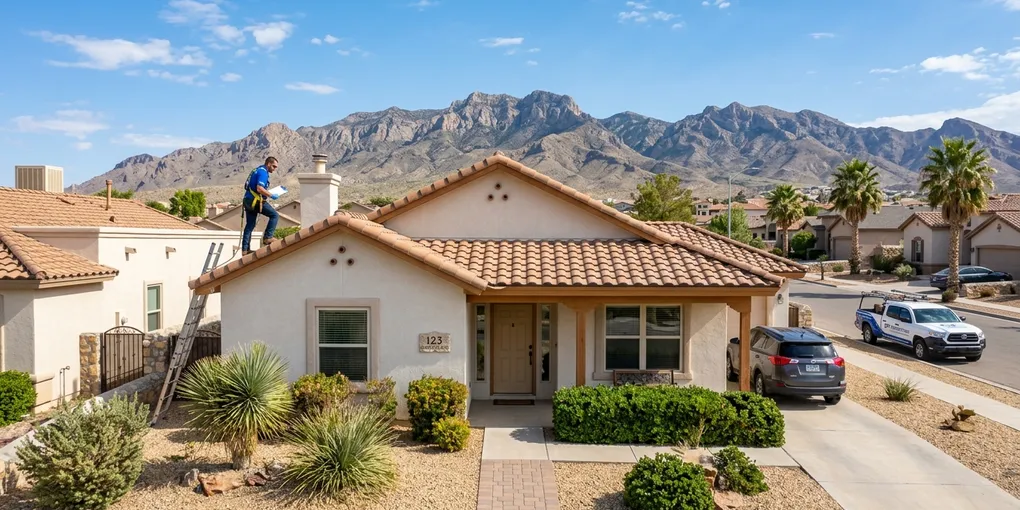
El Paso, TX Termite Disclosures: How to Spot Hidden WDI Damage Before Your Option Period Ends
Many homebuyers relocating to El Paso, Texas—from Fort Bliss families house-hunting in the Northeast and Eastlake to buyers eyeing historic brick homes in Sunset Heights, Kern Place, or Coronado—assume that 9 inches of annual Chihuahuan Desert rainfall means wood-destroying insects aren’t a serious threat.
In reality, El Paso sits in a moderate-to-heavy subterranean and desert drywood termite zone. Because desert termites nest deep beneath concrete slabs to tap artificial landscape irrigation, plumbing condensation, and monsoon runoff around Franklin Mountains foothills, infestations frequently go undetected for years—until a buyer inherits $8,000 to $25,000+ in hidden sill-plate, roof-rafter, or drywall-stud damage.
Understanding how Texas disclosure law works—and how to cross-check the seller’s paperwork against a licensed Texas Wood Destroying Insect (WDI) Report before your short Option Period expires—is essential to protecting your purchase.
Why Termites Thrive Inside El Paso’s Stucco & Brick Homes
El Paso’s housing stock combines mid-century masonry/stucco ranches (Cielo Vista, Eastwood, Ridgecrest), 1910s–1930s wood-framed bungalows (Manhattan Heights, Austin Terrace), and newer monolithic post-tension slab builds in Horizon City, Socorro, and the Upper Valley. Three local conditions accelerate concealed termite damage:
1. Desert Subterranean & Arid-Land Termites Beneath Slabs
Unlike humid Gulf Coast species that leave obvious exterior mud trails, arid-land and western subterranean termites (Reticulitermes and Heterotermes species) tunnel several feet below the sun-baked caliche and sandy-loam soil. They enter slab-on-grade homes through:
- 1/32-inch shrinkage cracks around cast-iron or PVC bath trap penetrations
- Expansion joints between garage slabs, stem walls, and converted patio rooms
- Moisture pockets created by drip irrigation lines, evaporative (“swamp”) cooler overflow drains, or slow slab plumbing leaks
2. Western Drywood Termites in Attic Vigas, Fascia & Roof Trusses
Flat-roof Pueblo-style stucco homes and pitched-shingle roofs across West El Paso frequently harbor western drywood termites, which require zero soil contact. Alate swarmers fly directly into unscreened soffit vents or cracked stucco parapets after late-summer monsoon storms, hollowing out roof rafters and window headers while dropping tiny hexagonal fecal pellets (frass) behind finished drywall.
3. Upper Valley High Water Tables & Flood Irrigation
In El Paso’s Upper Valley and Lower Valley, Rio Grande canal irrigation and higher seasonal soil moisture create humid microclimates around older pier-and-beam and slab foundations—accelerating both subterranean termite colonies and wood-decaying fungi.
Reviewing an El Paso Seller's Disclosure or WDI Inspection PDF?
Upload your TREC Seller's Disclosure Notice and home inspection packet to DisclosurePro AI—spot buried termite notes, roof hail claims, and exact repair credit numbers in 10 seconds. Analyze your 1st property free.
What Texas Law Requires Sellers to Disclose (TREC OP-H vs. TXR-1406)
Under Texas Property Code § 5.008, residential sellers in El Paso County must provide a written Seller’s Disclosure Notice—typically either the state TREC OP-H form or the more detailed Texas Realtors TXR-1406 form (see our complete Texas Seller’s Disclosure Notice Guide).
Both forms ask the seller to check Yes, No, or Unknown for:
-
- Active Termites (includes drywood)* and Termite or Wood Rot Damage Needing Repair
- Previous Termite or Wood-Destroying Insect (WDI) Treatment
Where El Paso Buyers Get Burned in the Fine Print
- Drilled Concrete Holes Without Disclosure: Walk the perimeter patio, front porch, and garage stem wall. Evenly spaced 1/2-inch patched mortar dots every 12 to 18 inches in concrete prove the property was previously drilled and sub-slab injected for subterranean termites—even if a short-tenure seller or flipper checked “Unknown” on the disclosure!
- VA Loan Mandatory WDI Rules Near Fort Bliss: Because Fort Bliss drives a huge share of El Paso VA home loans, note that the Department of Veterans Affairs requires a clean Texas Department of Agriculture (TDA) Wood Destroying Insect Report (
TDA Form SPCB T-4) on Texas properties. Any active infestation or conducive wood-rot condition flagged on the TDA WDI report must be treated and cleared prior to VA loan closing. - Unpermitted Evaporative-to-Refrigerated Air Retrofits & Patio Enclosures: Many older El Paso homes were retrofitted from roof-mounted swamp coolers to refrigerated HVAC—leaving poorly sealed roof deck penetrations that leak monsoon water into ceiling joists and attract termites.
El Paso Repair & Treatment Cost Benchmarks
If your WDI inspector or general home inspector uncovers past treatment evidence, conducive conditions, or active damage, use realistic local West Texas cost ranges when drafting your seller repair credit addendum:
- Licensed TDA WDI Inspection: $95 – $175
- Perimeter Trenching & Sub-Slab Termidor Treatment (1,800–2,400 sq ft slab): $1,100 – $2,400
- Whole-Structure Tent Fumigation (Severe Drywood Infestation): $2,400 – $4,800
- Load-Bearing Sill Plate & Exterior Wall Stud Framing Replacement (Behind Stucco/Brick Veneer): $4,500 – $16,500+ (stucco demolition, framing sistering, lath/elastomeric re-stucco, and interior drywall)
Frequently Asked Questions About Termites in El Paso, TX
Does a standard Texas home inspection include a termite (WDI) report?
No. Unless your home inspector holds a dual Texas Department of Agriculture Certified Applicator / Technician license in the Wood Destroying Insect category and you explicitly order the SPCB T-4 WDI Report add-on, a general TREC home inspection will not satisfy lender WDI requirements or probe specifically for hidden termite galleries.
How long do I have to negotiate termite repairs in El Paso?
In Texas, your leverage lives inside your Option Period—often just 5 to 10 calendar days from the effective contract date. Schedule both your general home inspection and your TDA WDI inspection within the first 48–72 hours so you have written contractor estimates in hand before 5:00 PM on your final Option day.
Can I cancel if the seller delivers the Texas Seller’s Disclosure late?
Yes. Under Texas Property Code § 5.008(f), if the seller fails to deliver the statutory Seller’s Disclosure Notice before you sign the contract, you have 7 days after receiving the notice to terminate for any reason and receive a full refund of your earnest money.