
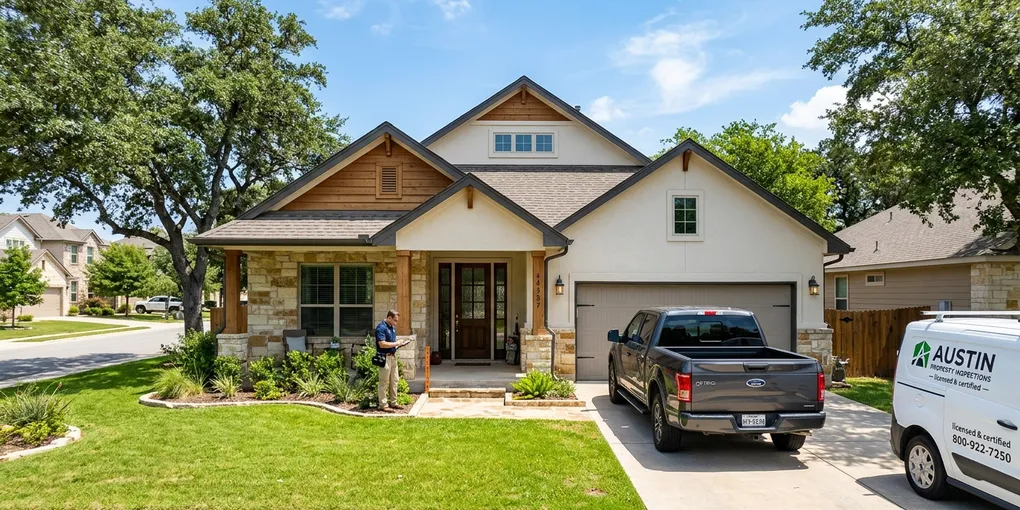
The Ultimate Guide to Spotting Roof Damage in Austin Real Estate Disclosures
Austin’s housing market continues to attract buyers from across the country, drawn by its vibrant culture, booming tech economy, and distinctive Hill Country lifestyle. Whether you are looking at a historic 1920s Craftsman bungalow in Hyde Park, a sleek modern residence with standing seam metal roofing in East Austin or Mueller, an iconic mid-century ranch in South Congress, or an expansive luxury estate in Westlake Hills, purchasing an Austin home is a premier investment.
Yet, many newcomers and local buyers overlook a crucial structural vulnerability: Central Texas weather is notoriously punishing on residential roofs.
Austin sits in a volatile meteorological corridor where extreme climate conditions collide. The region experiences destructive spring supercell thunderstorms dropping baseball-sized hail, blistering summer heatwaves with weeks of temperatures above 100°F that bake attics into thermal kilns, sudden winter arctic blasts that cause rapid freeze-thaw expansion, and torrential flash floods. Under these punishing conditions, even high-end roofing assemblies can suffer extensive, hidden failure.
Local real estate attorneys and buyer’s brokers regularly see how buyers navigate buyers through high-stakes transactions where hidden roof damage threatens to turn a dream home into an expensive nightmare. In this comprehensive guide, we dissect the mechanics of Austin roof failures, analyze Texas disclosure statutes, and show you exactly how to spot evasive seller disclosures before your contractual option period expires.
The Anatomy of Austin Roof Degradation: Hail, Thermal Shock, and Hill Country Oak Canopies
Understanding how residential roofs deteriorate across Travis County requires evaluating the specific materials and environmental conditions found in Austin.
Central Texas Hailstorms: Hidden Mat Fractures
Austin and the surrounding Hill Country regularly experience destructive hail events. When violent storm cells track across the Balcones Escarpment, hailstones strike with tremendous force:
- Asphalt Shingle Bruising: While large hail can knock off surface granules, the most dangerous damage occurs beneath the surface. Hail impacts crack the inner fiberglass mat of architectural shingles. Although the shingle may look intact from the driveway, the fractured mat allows rainwater to seep through into the underlayment.
- Metal Roof Denting vs. Seam Failure: Standing-seam and corrugated metal roofs are immensely popular in modern Austin architecture. While metal handles hail better than asphalt, heavy hail dents ribs, cracks protective paint finishes (leading to rust), and shears the rubber neoprene washers on exposed-fastener metal roofs, creating hundreds of potential leak points.
Scorching Thermal Shock and Granule Deterioration
From June through September, Austin routinely logs temperatures above 100°F, pushing roof surface temperatures over 160°F:
- Thermal Shock: Rapid temperature swings—such as a 105°F summer afternoon abruptly cooled by a sudden 70°F thunderstorm—cause violent thermal shock. Asphalt shingles expand and contract rapidly, breaking the adhesive sealant strips that bond shingle courses together.
- Attic Baking: In older Austin bungalows without radiant barriers or adequate soffit-and-ridge ventilation, superheated attic air bakes shingles from the underside, cooking the volatile asphalt oils and turning organic felt underlayment into brittle dust.
Hill Country Tree Canopies and Valley Rot
Austin is known for its magnificent live oak and cedar elm canopies in neighborhoods like Clarksville, Tarrytown, and Zilker:
- Tannic Acid Corrosion: Oak leaves and cedar needles accumulate rapidly in roof valleys and behind chimneys. As this organic matter decomposes, it creates a damp, acidic sludge that eats away at protective galvanization on valley flashings.
- Physical Abrasion: Heavy oak branches swaying in strong Texas gust fronts constantly scrape shingle surfaces, stripping ceramic granules and tearing shingles away from roof edges.
Tired of manually reading 200-page disclosures?
Let DisclosurePro AI scan your documents for hidden termite damage, structural issues, and unpermitted work in 10 seconds. Try it free today.
Navigating Texas Real Estate Disclosure Laws in Austin
Texas law establishes specific statutory disclosure requirements for sellers, but buyers must understand how sellers routinely minimize or obscure serious roofing conditions.
Texas Property Code Section 5.008
Under Section 5.008 of the Texas Property Code, sellers of single-family residences must complete and deliver the Seller’s Disclosure Notice (standardized via Texas Real Estate Commission form TREC OP-H or Texas REALTORS® form TXR-1406):
- Section 4: Requires the seller to declare the Roof Type, Approximate Age, and affirmatively disclose any known Defects or Malfunctions in the roof, ceilings, walls, or chimneys.
- Section 7: Demands disclosure of any Previous or Unresolved Insurance Claims filed for property damage (including wind and hail claims).
- Water Penetration History: The seller must state whether the home has experienced water penetration, roof leaks, or structural attic dampness.
The Pocketed Insurance Claim Dilemma in Central Texas
Following catastrophic hail storms in the Austin metro area, a widespread disclosure trap routinely ensnares unwary buyers:
- A major hailstorm damages a home’s roof. The homeowner files an insurance claim.
- The insurance adjuster inspects the property, agrees the roof is a total loss, and issues a payout of $22,000 to replace it.
- Instead of replacing the roof, the homeowner spends $800 on a temporary caulk patch and pockets the remaining $21,200.
- When selling the property, the seller checks “No known active leaks” on the disclosure and omits the prior hail claim.
The Devastating Result for the Buyer: When the buyer closes and attempts to secure homeowner’s insurance, the carrier consults the C.L.U.E. (Comprehensive Loss Underwriting Exchange) database. The insurer sees that a total-loss hail settlement was previously paid out on that roof address. The new insurer will either deny coverage entirely or insert a pre-existing damage exclusion—meaning if future storms destroy the roof, the new owner cannot collect a single dollar.
Deceptive Language Used by Austin Sellers
Austin sellers frequently deploy strategic phrasing to sidestep direct disclosure:
- “Roof inspected by roofer in 2024; minor tune-up completed” (masking that the roofer warned the roof had zero remaining service life).
- “Metal roof original; timeless durability” (omitting that all rubber screw gaskets have deteriorated and need complete replacement).
- “No active leaks during seller’s ownership” (a common dodge used by investors and absentee landlords who never checked the attic).
- “New shingles installed in 2022” (neglecting to reveal that the installation was done without City of Austin building permits over rotted decking).
The Manual Review Problem: Racing the Texas Option Clock
Under Paragraph 23 of the standard TREC One-to-Four Family Residential Contract, Austin buyers purchase a contractual Option Period—typically lasting only 5 to 7 days.
During this short window, buyers must digest an overwhelming stack of due diligence materials:
- The Seller’s Disclosure Notice and attached utility disclosures.
- The property’s C.L.U.E. insurance history report.
- The comprehensive general home inspection report (often 60 to 90 pages).
- City of Austin Permitting and Development Department history (verifying roofing and HVAC permits).
- HOA bylaws, architectural guidelines, and resale certificates.
Critical roof warnings are frequently buried in low-resolution scanned PDFs or brief inspector notes. For example, a home inspector might write: “Noted missing drip edge and multiple hail hits on south ridge cap; advise evaluation by licensed roofing contractor.” If a buyer manually skimming documents does not recognize the gravity of that note, their option period will expire, locking them into a multi-thousand-dollar liability.
Financial Impact: A Real-World East Austin Case Study
To understand the severe financial exposure of a missed roof disclosure, consider this realistic scenario from a renovated home purchase in East Austin.
The Acquisition
Tyler and Jessica purchased a stylishly remodeled 1950s bungalow in East Austin for $745,000. The seller, an independent real estate flipper, marketed the property with “fresh designer finishes and an updated roof.”
On the TXR-1406 Seller’s Disclosure Notice, the seller marked the roof age as “Approx. 3 years” and checked “No” to active leaks, defects, or insurance claims. The general home inspector inspected the roof from an eave ladder, noting: “Architectural shingles appear clean and flat; no active leaks seen inside finished living space.” Confident in the seller’s representations, Tyler and Jessica closed.
The Disaster
Six months later, an intense spring storm swept across Central Texas, dumping three inches of torrential rain with 60-mph wind gusts.
That evening, water poured through the drywall seams in the living room ceiling and ran down behind the kitchen cabinets. Tyler climbed into the shallow attic and found water gushing through rotted decking boards.
An independent Master Elite roofing contractor arrived the next morning and discovered severe hidden defects:
- The seller had installed a single layer of cheap architectural shingles directly over rotted, 1950s tongue-and-groove decking without pulling City of Austin building permits.
- The property had been battered by a massive hailstorm 18 months earlier. The previous owner had received an insurance payout of $19,800, which was pocketed during the flip rather than used to replace the decking or underlayment.
- The new shingles lacked code-mandated ice and water shield in the valleys, and the valley flashing was nailed directly through the water channels.
- Moisture trapped beneath the new shingles had generated extensive black mold across the attic rafters.
The Financial Devastation
Because the LLC seller had already dissolved and dispersed proceeds, Tyler and Jessica had to fund the total reconstruction out-of-pocket:
| Expense Item | Cost |
|---|---|
| Complete tear-off of improperly installed shingles down to rafters | $5,800 |
| Replacement of rotted tongue-and-groove roof decking with OSB sheathing | $9,400 |
| Class 4 impact-resistant architectural shingle system and synthetic underlayment | $18,200 |
| Professional attic mold remediation and antimicrobial encapsulation | $8,500 |
| Kitchen drywall replacement, insulation re-blowing, and cabinet reinstallation | $11,200 |
| City of Austin residential building permits and structural inspection fees | $1,800 |
| Total Devastation | $54,900 |
Frequently Asked Questions about Roof Issues in Austin
1. Are standing-seam metal roofs hail-proof in Austin?
No roofing material is completely immune to severe hail. While standing-seam metal roofs will not fracture or puncture from golf-ball-sized hail like asphalt shingles, large hailstones can leave deep cosmetic dents and damage protective enamel coatings. Furthermore, exposed-fastener metal roofs (where screws penetrate the metal panels directly) use rubber washers that dry rot in Austin’s extreme heat, requiring screw replacement every 8 to 12 years.
2. Does the City of Austin require permits for residential roof replacements?
Yes. The City of Austin Development Services Department requires a building permit for any roof replacement that involves replacing more than 25% of the total roof surface or replacing decking sheathing. Furthermore, Austin requires adherence to the International Residential Code (IRC) energy conservation mandates, including proper attic ventilation calculations.
3. What is the difference between cosmetic and functional hail damage on an Austin roof?
Cosmetic hail damage refers to surface dents or granule loss that does not impair the water-shedding functionality of the roof (common on metal panels). Functional hail damage refers to fractures of the underlying shingle mat or broken tile structures that allow water penetration. Many modern Texas insurance policies contain “Cosmetic Damage Exclusion Endorsements,” meaning insurers will not pay to repair hail dents unless water is actively penetrating the building.
4. How does attic ventilation affect roof lifespan in Austin?
Proper attic ventilation is crucial in Central Texas. Without balanced soffit intake and ridge exhaust vents, summer attic temperatures can exceed 150°F. This intense heat bakes asphalt shingles from the bottom up, leading to thermal blistering, loss of adhesive seal strips, and premature failure within 10 to 12 years instead of the anticipated 25 to 30 years.